
Key Takeaways: The OLED Monitor Landscape
- OLED monitor prices are plummeting due to increased production, new manufacturing tech, and Mini-LED competition, making them more accessible than ever, ushering in the ‘OLED Revolution’.
- OLED offers unparalleled contrast, true blacks, and near-instant response times, but burn-in remains a primary concern, though modern manufacturer tech and warranties significantly mitigate the risk.
- Not all ‘HDMI 2.1’ is equal; gamers must understand the critical difference between TMDS and FRL for true next-gen console and PC features like full VRR and high bandwidth.
- Choosing the right OLED involves a strategic balance of resolution, refresh rate, panel type (QD-OLED vs. WOLED), and budget, all carefully aligned with your GPU’s capabilities to maximize performance.
- LoadSyn provides specific, data-backed model recommendations for various budgets and use cases, from highly affordable 1440p options to cutting-edge 4K ultrawides, ensuring you make an informed upgrade.
For years, the dream of an OLED gaming monitor felt like a distant, luxury fantasy. Exorbitant prices kept the ultimate display technology out of reach for most gamers, relegating it to aspirational wishlists. But something is shifting dramatically. In 2026, we’re witnessing an unprecedented ‘OLED Revolution’ – prices are plummeting, new technologies are emerging, and the market is flooded with options that promise perfect blacks, blistering response times, and vibrant colors previously unimaginable. This isn’t just a gradual evolution; it’s a seismic change that’s redefining what ‘premium’ means for gaming displays. However, with rapid change comes complexity. How do you navigate the influx of new models without making costly compromises? What sacrifices, if any, are truly made for affordability? And are the long-standing concerns about OLED technology finally being put to rest by modern advancements? Join us as LoadSyn performs a definitive analysis, cutting through the marketing hype to bring you the data-backed facts you need to make the smartest upgrade decision.
The OLED Price Revolution: What’s Driving the Drop?
The dramatic shift in OLED monitor pricing isn’t accidental; it’s a confluence of strategic manufacturing decisions and aggressive market competition. Samsung Display and LG Display, the two titans of OLED panel production, are significantly ramping up output. Samsung Display, for instance, plans to boost QD-OLED monitor panel production by 50% in 2025 alone, demonstrating a clear commitment to meeting demand. Concurrently, LG is committing to bringing its brighter, next-gen TV OLED tech (like Primary RGB Tandem OLED) to PC monitors, further intensifying the supply side. This increased supply directly impacts cost. Furthermore, new players like TCL are entering the market with innovative manufacturing techniques, such as 8th Gen inkjet-printed (IJP) OLED panels, promising even brighter and cheaper OLEDs that will soon hit the shelves. This growing competition among panel manufacturers, combined with mounting pressure from advanced Mini-LED displays offering compelling value, is forcing OLED prices down faster than anticipated. The market is projected to grow from just $75 million in 2022 to over $1 billion in 2025, with a significant portion dedicated to gaming, proving that robust consumer demand is a key driver in this rapid adoption and the subsequent drop in prices.
OLED Monitor Market Growth & Price Trajectory (2022-2026 Forecast)
This chart illustrates the exponential growth of the OLED monitor market value and the corresponding decline in average entry-level prices, driven by increased production and competition.
OLED vs. The World: Panel Tech Deep Dive
At the heart of the OLED revolution is its fundamental technological superiority in certain key areas. Unlike traditional LCDs (which include IPS, VA, and TN panels) that rely on a backlight system to illuminate pixels, OLEDs are ‘self-emissive.’ Each pixel generates its own light, allowing for individual pixel control. This architectural difference unlocks truly perfect blacks, infinite contrast ratios, and near-instantaneous pixel response times. While IPS panels offer excellent color accuracy and viewing angles, and VA panels provide good contrast at a lower cost, neither can match OLED’s per-pixel precision. Mini-LED, a strong contender, improves LCD contrast with many local dimming zones but still suffers from ‘blooming’ artifacts around bright objects on dark backgrounds and cannot achieve true black at the pixel level. Understanding these core differences is crucial for appreciating OLED’s profound impact on gaming immersion and competitive performance, offering a visual fidelity that simply cannot be replicated by backlit displays.
| Feature | OLED (WOLED/QD-OLED) | IPS (In-Plane Switching) | VA (Vertical Alignment) | Mini-LED (LCD) |
|---|---|---|---|---|
| Contrast Ratio | Infinite (Perfect Blacks) | Good (~1,000:1) | Very Good (~3,000:1) | Excellent (~10,000:1) |
| Response Time (GtG) | Near-instant (0.03ms) | Fast (1-4ms) | Moderate (4-8ms) | Fast (1-4ms) |
| Color Accuracy | Excellent (Wide Gamut) | Excellent | Good | Excellent (Wide Gamut) |
| Viewing Angles | Excellent | Excellent | Good | Good |
| Brightness | Moderate (Improving) | Good | Good | Very High |
| HDR Performance | Superior (True Black) | Limited | Good | Excellent (High Peak) |
| Burn-in Risk | Present (Mitigated) | Very Low | Very Low | Very Low |
| Typical Price | Premium / Mid-Range | Mid-Range | Budget / Mid | High-End |
Beyond the Hype: Key Features to Watch For
Refresh Rates & Response Times: The Speed You Need
High refresh rates (Hz) and ultra-low response times (ms) are the bedrock of competitive gaming, directly translating to smoother motion and quicker reactions. While 60Hz was once standard, the modern gaming experience demands 144Hz, 240Hz, or even 360Hz and above for buttery-smooth motion clarity. OLED panels inherently offer near-instantaneous pixel response times (as low as 0.03ms Grey-to-Grey), virtually eliminating the motion blur and ghosting that can plague slower LCDs. This makes them exceptional for fast-paced shooters and esports titles where every millisecond counts, allowing players to track targets with unparalleled precision. While 500Hz+ monitors are emerging, many users find the visual jump beyond 240Hz or 360Hz less perceptible, making these rates a practical sweet spot for both competitive edge and visual fidelity without overspending.
Understanding Refresh Rate Tiers for Gaming
- 144Hz: The entry point for smooth gaming, a significant upgrade from 60Hz. Suitable for most genres, offering a solid balance.
- 180Hz – 240Hz: Excellent for competitive play, offering a noticeable advantage in fast-paced games. This is becoming the sweet spot for many OLEDs entering the affordable range.
- 360Hz – 500Hz+: Ultra-high refresh rates for elite esports players, where every fractional edge can mean victory. Often seen in premium QD-OLED models and emerging as the bleeding edge of speed.
Adaptive Sync: G-Sync, FreeSync, and Compatibility
Screen tearing and stuttering can ruin an otherwise perfect gaming experience, disrupting immersion and competitive flow. Adaptive Sync technologies like NVIDIA G-SYNC and AMD FreeSync synchronize your monitor’s refresh rate with your GPU’s frame output, effectively eliminating these distracting visual artifacts. NVIDIA offers different tiers: G-SYNC ULTIMATE for the best HDR and ultra-low latency, standard G-SYNC with a dedicated processor for guaranteed performance, and G-SYNC Compatible for validated FreeSync monitors that meet NVIDIA’s standards. Most new OLED monitors support both FreeSync Premium Pro and are G-SYNC Compatible, offering broad compatibility across GPU brands. However, as Marcus Coleman always emphasizes in the lab, be wary of ambiguous marketing claims, especially regarding console compatibility. Always verify precise specifications.
CRITICAL ALERT: HDMI 2.1 Bandwidth Trap
Many monitors advertised with ‘HDMI 2.1’ for console gaming (especially PS5) may misleadingly use HDMI 2.1 TMDS (Transition Minimized Differential Signaling) with a maximum bandwidth of 18Gbps. This older implementation often lacks crucial features like full Variable Refresh Rate (VRR) support, which requires the newer, full-spec HDMI 2.1 FRL (Fixed Rate Link) with 48Gbps bandwidth. As our lab tests consistently show, without FRL, you simply won’t get uncompromised next-gen console and PC performance at higher resolutions and refresh rates. Always check detailed product specifications or trusted reviews (like LoadSyn’s) to confirm explicit full HDMI 2.1 FRL support before making a purchase. Don’t fall for the marketing ambiguity.
Resolution & Size: Finding Your Pixel Sweet Spot
The ideal resolution and screen size largely depend on your GPU’s raw power and personal preference, making it a critical aspect of your monitor choice. 1080p (Full HD) is still a viable option for budget systems or ultra-high refresh rate competitive play, where frames per second outweigh pixel density. 1440p (Quad HD) is often considered the ‘sweet spot’ for 27-inch monitors, expertly balancing visual clarity with manageable GPU demands for a wide range of games. 4K (Ultra HD) offers stunning, unparalleled detail, especially on 32-inch and larger displays, but unequivocally requires a powerful graphics card to maintain high frame rates. Ultrawide monitors (21:9 or 32:9 aspect ratios) provide an immersive cinematic experience, perfect for RPGs, simulations, and productivity, but may not be universally supported by all games or preferred for competitive titles. With OLED’s self-emissive pixels and infinite contrast, even 1440p can look incredibly sharp and detailed, often surpassing the perceived clarity of higher resolutions on lesser panel technologies due to the superior pixel density and contrast.

The Burn-In Elephant in the Room: OLED Longevity
For many, the specter of ‘burn-in’ (or permanent image retention) has been the primary deterrent to embracing OLED technology. Burn-in occurs when static images, like UI elements or taskbars, are displayed for prolonged periods, causing pixels to degrade unevenly and potentially leave a permanent ghost image. While early OLED panels were indeed more susceptible, modern gaming OLEDs from leading manufacturers like Samsung and LG incorporate sophisticated mitigation technologies that significantly reduce this risk. Features such as pixel shifting, logo brightness adjustment, automatic pixel refresh cycles, and robust multi-year burn-in warranties (e.g., AOC’s impressive 3-year coverage) are now standard. While the concern is undeniably valid, current implementations make OLED a far safer bet than ever before, especially with mindful usage habits. As our lab data confirms, these preventative measures, combined with a good warranty, provide substantial peace of mind for enthusiast gamers.
OLED Gaming Monitors: Pros and Cons
Pros
- Perfect Blacks & Infinite Contrast: Unmatched visual depth.
- Near-Instant Response Times: Virtually zero motion blur.
- Vibrant Colors & Wide Gamut: Exceptional saturation.
- Excellent Viewing Angles: Consistent quality from any angle.
- Slim Design & Efficiency: Modern aesthetic.
- Falling Prices: Premium visuals becoming accessible.
Cons
- Potential for Burn-in: Remains a consideration for static UI.
- Lower Full-Screen Brightness: Compared to flagship Mini-LED.
- Text Clarity Issues: Sub-pixel layouts can affect fine text.
- Premium Cost: Still generally more expensive than LCDs.
LoadSyn’s Top OLED Monitor Recommendations
Based on our comprehensive analysis of current market trends, rigorous performance metrics, and invaluable community feedback, here are LoadSyn’s top recommendations for OLED gaming monitors across various categories and budgets. We prioritize a careful balance of price, raw performance, and panel longevity features, ensuring you get the most value and future-proofing from your investment in this exciting new era of displays.
Curated OLED Picks for Every Gamer
MSI MPG 321URX QD-OLED
32-inch, 4K, 240Hz, QD-OLED, superb image quality, excellent connectivity.
PC Gamer’s top pick, a strong all-rounder.
Samsung Odyssey OLED G5 (S27DG50)
27-inch, 1440p, 180Hz, 0.03ms, QD-OLED, often seen on deep discount (~$350-$400).
Directly addresses price sensitivity for affordable OLEDs.
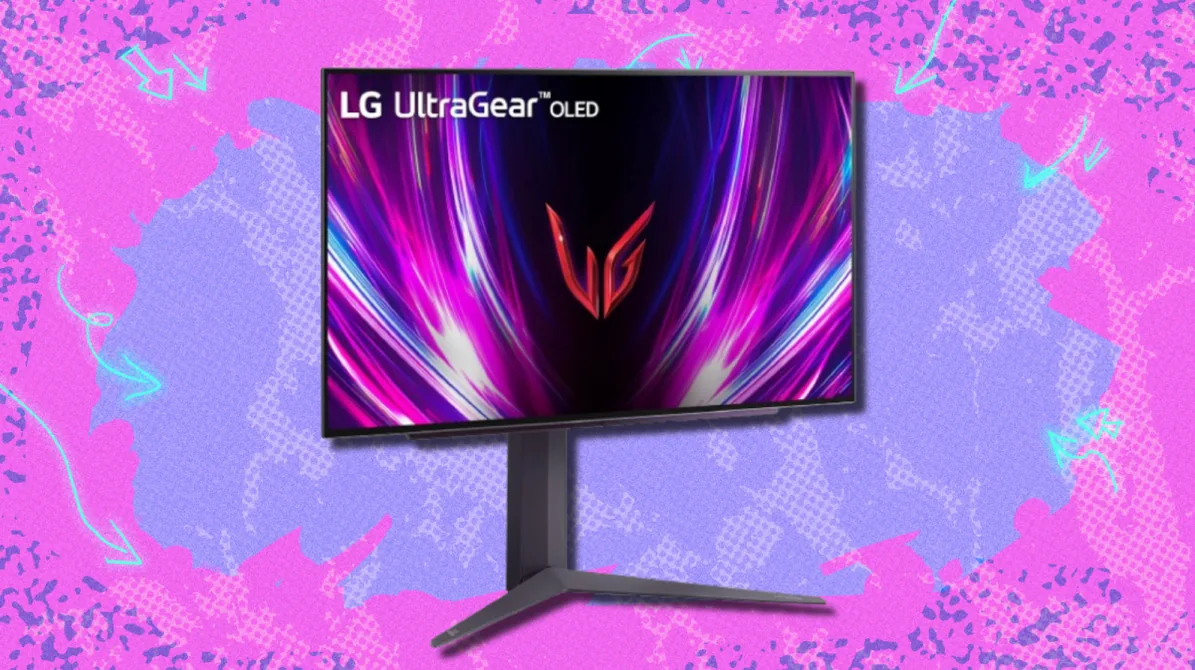
LG 27-inch Ultragear OLED (27GS93QE)
27-inch, 1440p, 240Hz, 0.03ms, WOLED, FreeSync Premium Pro, frequently on sale for ~$500.
Significant price drop and excellent performance for the cost.
AOC Gaming Q27G4ZDR / Q27G4SDR
27-inch, 1440p, 240Hz/360Hz, QD-OLED, aggressive pricing (£399/£469).
New budget-friendly QD-OLEDs for high-performance demand.
| Model | Size | Res | Hz | Panel | Sync |
|---|---|---|---|---|---|
| MSI MPG 321URX | 32″ | 4K | 240Hz | QD-OLED | FreeSync, G-Sync |
| Samsung G5 | 27″ | 1440p | 180Hz | QD-OLED | FreeSync, G-Sync |
| LG 27GS93QE | 27″ | 1440p | 240Hz | WOLED | FreeSync, G-Sync |
| AOC Q27G4SDR | 27″ | 1440p | 360Hz | QD-OLED | Adaptive, G-Sync |
The Future of Gaming Displays: What’s Next?
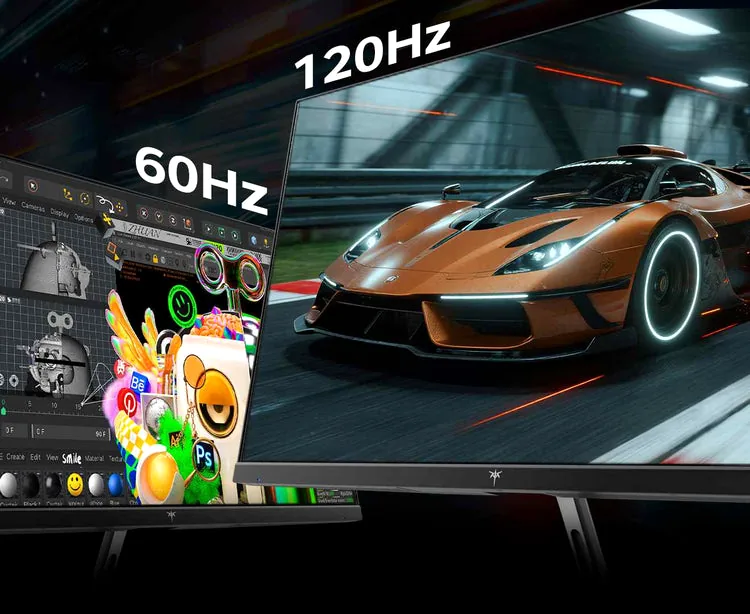
The OLED revolution is far from over; in fact, we’re already seeing glimpses of the next wave of innovation that promises to push gaming displays even further. LG’s commitment to ‘Primary RGB Tandem OLED’ tech, for instance, aims to deliver significantly brighter and more energy-efficient panels. Meanwhile, Samsung Display is not resting on its laurels, with upcoming 500Hz QD-OLEDs and 27-inch 4K QD-OLEDs poised to redefine speed and clarity. A particularly exciting development is the emergence of dual-mode monitors, such as those from ROG, that can dynamically switch between high-resolution/lower-refresh-rate (e.g., 4K 162Hz) and lower-resolution/ultra-high-refresh-rate (e.g., FHD 485Hz) modes, offering unprecedented versatility. Features like NVIDIA G-SYNC Pulsar are pushing effective motion clarity beyond raw refresh rates, and built-in Reflex Analyzers are measuring system latency in milliseconds, giving competitive players crucial data. These advancements promise not just iterative improvements, but fundamental shifts in how we experience games, making the ‘OLED Horizon’ an ever-expanding landscape of possibilities for truly immersive and responsive gameplay.
The OLED Horizon: An Unmissable Future
The era of affordable OLED gaming monitors is unequivocally here, and it’s nothing short of transformative for the gaming landscape. While the market is indeed becoming more competitive and complex, the core promise of unparalleled image quality and blazing-fast performance is now within reach for a broader audience than ever before. Gamers no longer need to compromise on breathtaking visuals for competitive speed, or vice-versa. With manufacturers actively addressing concerns like burn-in through advanced mitigation technologies and continually innovating with brighter, faster panels, the OLED future for PC gaming is not just bright—it’s dazzling. Our definitive analysis concludes that now is an excellent time to consider an OLED upgrade, provided you make an informed choice based on your specific needs and budget, always keeping a keen eye on the nuances of panel technology and critical connectivity standards. The revolution is well underway; don’t get left behind.