
The Next-Gen Promise vs. The Pricey Reality
The world of PC gaming thrives on innovation, and the arrival of DDR5 memory has promised a new era of speed and efficiency. Brands like G.SKILL and Crucial are pushing the boundaries with dazzling new modules, tempting enthusiasts with unprecedented performance. Yet, for many gamers, this dream of next-gen upgrades feels increasingly out of reach. The culprit? An insatiable demand from the artificial intelligence sector, which is rapidly reshaping the global memory market and sending prices skyrocketing, turning a promising upgrade into a frustrating waiting game. More critically, new CPU architectures like Intel’s Arrow Lake are mandating DDR5, creating a ‘paywall’ for those clinging to DDR4.
The Allure of Next-Gen: Intel Arrow Lake, AMD Ryzen 9000, and the Rise of CUDIMM
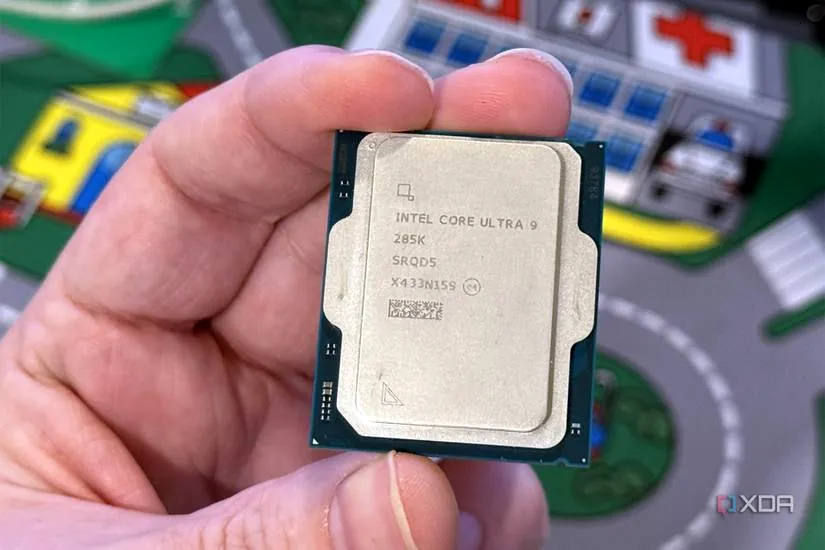
The architectural landscape has shifted decisively with the launch of the Intel Core Ultra Series 2 (Arrow Lake-S) processors. These chips represent a hard break from the past, mandating the new LGA 1851 socket and offering zero legacy support for DDR4. This isn’t just a marketing choice; it’s a technical necessity driven by the introduction of CUDIMM (Clock Unbuffered DIMM) technology. By integrating a Client Clock Driver (CKD) directly onto the module, these DIMMs can regenerate the clock signal, effectively mitigating signal jitter and noise that previously bottlenecked the Integrated Memory Controller (IMC). This engineering breakthrough allows for stable throughput exceeding 8000MHz, with upcoming AMD EXPO 1.2 profiles already being prepped to support these ultra-high-frequency modules on the Ryzen 9000 platform.
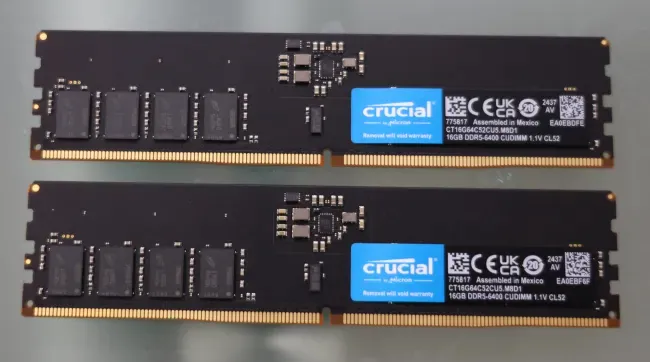
In the lab, we are seeing the tangible results of this signal integrity. The G.SKILL Trident Z5 Royal (DDR5-8400 CL40) is currently the gold standard for responsiveness, delivering a real-world latency of just 9.52 ns—a significant improvement over the 16.43 ns found in standard DDR5-5600 CL46 kits like the Crucial CT64G56C46U5. For those entering the CUDIMM ecosystem, Crucial’s DDR5-6400 CUDIMM kits (CT2K16G64C52CU5) offer an accessible entry point at roughly $169 USD, though their CL52 timings prioritize stability over raw speed. Meanwhile, the Crucial Pro OC 6400 CL32 series demonstrates that tight timings remain critical for minimizing the ‘latency penalty’ often associated with the transition from mature DDR4 to early-stage DDR5.
DDR4 vs. DDR5: Latency & Speed Comparison
| Metric | High-End DDR4 (3600 CL14) | Crucial DDR5 (5600 CL46) | G.Skill Trident Z5 Royal DDR5 (8400 CL40) |
|---|---|---|---|
| Frequency (MT/s) | 3600 | 5600 | 8400 |
| CAS Latency (CL) | 14 | 46 | 40 |
| Real Latency (ns) | ~7.78 | 16.43 | 9.52 |
| tRAS | 34 | 45 | 134 |
| tRCD | 14 | 46 | 52 |
| tRP | 14 | 45 | 52 |
The AI Tsunami: How Hyperscalers Are Redefining Memory Markets
The enthusiasm for these dazzling new modules is, however, severely tempered by a harsh economic reality. The primary force driving global memory (DRAM/NAND) supply shortages and the resulting exponential price increases is the unprecedented demand from the artificial intelligence sector. Companies known as ‘hyperscalers’ are investing colossal sums in AI accelerators and High-Bandwidth Memory (HBM), which consume vast, disproportionate amounts of manufacturing capacity. This seismic shift means less capacity is available for commodity DRAM and NAND, severely impacting the consumer PC market. The statistical data is stark: DRAM prices have surged by an alarming 171.8% year-over-year, effectively making essential upgrades prohibitively expensive for the average gamer and PC builder. This isn’t a market fluctuation; it’s a structural reorientation.

Micron’s Strategic Retreat: The End of Crucial Consumer Memory
One of the most significant and sobering indicators of this profound market shift is Micron Technology’s strategic pivot away from its long-standing Crucial consumer memory and storage brand. Sales are slated to cease by February 2026, a difficult but calculated decision driven by the pursuit of higher profitability in the booming AI space. Micron is systematically reallocating its precious manufacturing capacity from lower-margin consumer components to high-margin enterprise products like HBM and enterprise DDR5. While Micron will honor existing warranties and support, this move signals a clear and decisive prioritization of strategic, high-margin customers over the traditional consumer market, further tightening inventory and increasing volume risks for PC builders globally. It’s a stark reminder that market forces, especially those as powerful as AI demand, often dictate the fate of beloved consumer brands.
The Gamer’s Dilemma: Navigating the 2026 Obsolescence Threshold
The same memory kit I bought a little over a year ago for like 180.00 is now 750.00 can. Nobody gonna build a PC when ram costs more than the avg. Gpu
The ‘2026 Obsolescence Threshold’ is less a technical wall and more of a platform shift that requires careful navigation. While Intel’s Arrow Lake (Core Ultra 200S) mandates DDR5, our testing confirms that this generation prioritizes productivity and performance-per-watt over a massive gaming leap. The new Lion Cove P-Cores utilize a higher base frequency despite a slight Max Turbo reduction, and the Skymont E-Cores have dropped Hyper-Threading to streamline multi-threaded efficiency. This, combined with a redesigned cache hierarchy where E-Cores finally access the 36MB of shared L3 cache, results in a processor that runs up to 13°C cooler but doesn’t necessarily leave 14th Gen gaming performance in the dust. Notably, builders can still utilize their LGA 1700 cooling solutions on the new LGA 1851 socket, providing a rare legacy bridge.
For ‘The Holdouts’ currently running high-bin DDR4-3600 CL14 on AM4 or LGA 1700, the 2026 cliff is not yet here. High-speed DDR4 remains incredibly viable for gaming, often matching or exceeding the 1% low frame times of budget DDR5 kits when low-level sub-timings like tRFC and tFAW are manually tuned. Until we see a true generational gaming breakthrough that requires the massive bandwidth of 8400MT/s+ CUDIMMs, sticking with a well-tuned DDR4 system is a strategic, technically sound choice. Staving off the ‘Mandatory Upgrade’ paywall is possible if your primary goal is frame consistency rather than adopting the latest AI NPU features. We recommend waiting for the DDR5 market to stabilize or for the Zen 6/Arrow Lake Refresh cycle before committing to a total platform overhaul.
DDR5 Decoded: Why This Next-Gen Tech Matters (If You Can Get It)
- Double the Bandwidth: DDR5 starts at 4800MT/s, a 50% increase over DDR4’s top speed, with plans to scale much higher, translating to faster data processing for demanding games and applications.
- Improved Efficiency: Operates at a lower nominal voltage (1.1V vs. DDR4’s 1.2V), reducing power consumption and potentially leading to cooler system operation.
- Dual Independent Channels: Each DIMM features two independent 32-bit channels, improving data access latencies and optimizing how the CPU interacts with memory.
- On-Die ECC (ODECC): Enhances reliability by correcting internal bit errors within the DRAM chip itself, reducing potential system instability and data corruption.
- Integrated PMICs: On-board Power Management Integrated Circuits provide more stable and efficient power delivery directly to the memory modules, improving overclocking potential and overall stability.
- CUDIMM (Clock Unbuffered DIMM) Technology: Features an integrated Client Clock Driver (CKD) that regenerates the clock signal on the module. This drastically improves signal integrity, allowing for stable operation at 8000MHz+ and reducing the strain on the CPU’s IMC. These modules remain physically compatible with standard 288-pin DDR5 UDIMM slots.
- Increased Density: Supports higher density chips (up to 64Gb), enabling larger module capacities (up to 256GB per DIMM), crucial for future-proofing and high-end workstation applications.
The Long Road Ahead: When Can Gamers Expect Relief?
According to Micron’s leadership, structural constraints in the memory market, heavily influenced by the high wafer capacity consumption of HBM production, mean global DRAM supply constraints are expected to extend well beyond 2026. Despite aggressive manufacturing expansions, including new fabrication plants in Idaho (scheduled for mid-2027 production) and New York (slated for construction in early 2026), Micron anticipates only meeting a *portion* of key customer demand. This data suggests sustained shortages and continued price volatility will be the norm, with projected relief not expected until late 2027 or even 2028. For gamers, this means patience will not just be a virtue, but a necessity, and strategic planning for upgrades will be more critical than ever, shifting the focus from immediate gratification to long-term value.
Key Takeaway for Gamers
Expect elevated DDR5 prices and supply constraints to persist until at least late 2027 or 2028. Strategic upgrades and patience are advised. For Intel Core Ultra Series 2, DDR5 is mandatory, but high-bin DDR4 remains viable for gaming on other platforms with careful tuning.
A Glimmer of Hope? Gaming’s Unique Position in the Memory Crunch
Gaming’s Resilience in a Shifting Market
While the broader consumer market faces severe impacts from AI-driven demand, statistical projections suggest that niches like dedicated gaming and industrial memory are projected to be *less affected* by the overall supply crunch. This offers a nuanced perspective: while prices will undoubtedly remain high, dedicated gaming memory might see more stable, albeit premium, availability compared to general-purpose consumer components. This could be attributed to specific vendor commitments to the gaming segment or the specialized nature of gaming modules that cater to a distinct performance-oriented demographic. For the discerning gamer, this means that while the cost-per-frame might remain elevated, the availability of high-performance modules might not completely vanish. However, with platforms like Intel Arrow Lake mandating DDR5, the choice for new builds is clear, despite the cost.
Frequently Asked Questions
Technically, no. While new platforms like Intel Arrow Lake require DDR5, high-end DDR4 kits (3600 CL14) still provide excellent frame pacing and 1% lows that rival mid-range DDR5. It only becomes ‘obsolete’ if you must have the latest CPU architecture, but for pure gaming, it remains viable.
CUDIMM stands for Clock Unbuffered DIMM. It includes an integrated Clock Driver (CKD) on the RAM stick itself. This chip regenerates the clock signal, allowing for much higher frequencies (8000MT/s+) and better stability than traditional UDIMMs by reducing signal noise.
No. The Intel Core Ultra Series 2 (Arrow Lake-S) uses the LGA 1851 socket and exclusively supports DDR5. There is no DDR4 compatibility path for this generation.
While high-end DDR4-3600 CL14 has a real latency of ~7.78 ns, high-speed DDR5-8400 CL40 brings that down to 9.52 ns. While DDR4 is still technically ‘faster’ in raw access time, the massive bandwidth of DDR5-8400 provides a higher performance ceiling for modern asset streaming.
The Road Ahead for PC Gamers: A Technical Perspective
- AI Demand Dominates: The insatiable hunger for high-bandwidth memory from the AI sector remains the primary driver of DDR5 price hikes and supply shortages, extending well into late 2027/2028.
- Mandatory DDR5 for New Platforms: Intel’s Core Ultra Series 2 (Arrow Lake) processors demand a full platform upgrade to LGA 1851 and DDR5 memory, with no DDR4 support. While efficient, their primary focus isn’t a significant gaming performance leap over 14th Gen.
- CUDIMM: The Future of High-Speed Memory: Clock Unbuffered DIMMs (CUDIMMs) with integrated Clock Drivers (CKD) are critical for stabilizing and enabling ultra-high DDR5 speeds (8000MT/s+), with support coming from both Intel and AMD (EXPO 1.2).
- Latency Matters, Speed Pays Off: While high-end DDR4 (e.g., 3600 CL14) can still offer competitive real latency for gaming, high-frequency, low-latency DDR5 (e.g., 8400 CL40 at ~9.52ns) provides significantly better bandwidth and, in its fastest configurations, comparable or superior responsiveness.
- DDR4’s Enduring Value (with caveats): For existing systems, high-bin DDR4 remains a remarkably ‘smart’ choice for gaming, especially with low-level tuning. However, for new builds involving Intel’s latest platforms, DDR5 is a non-negotiable, albeit expensive, investment.
- Strategic Planning is Paramount: Gamers must weigh the ‘mandatory upgrade’ costs against actual gaming performance gains. Patience, combined with a focus on optimizing current DDR4 systems or meticulously planning premium DDR5 upgrades for true generational shifts, will define smart spending.