
The Small Form Factor Revolution & NZXT’s Bold Return
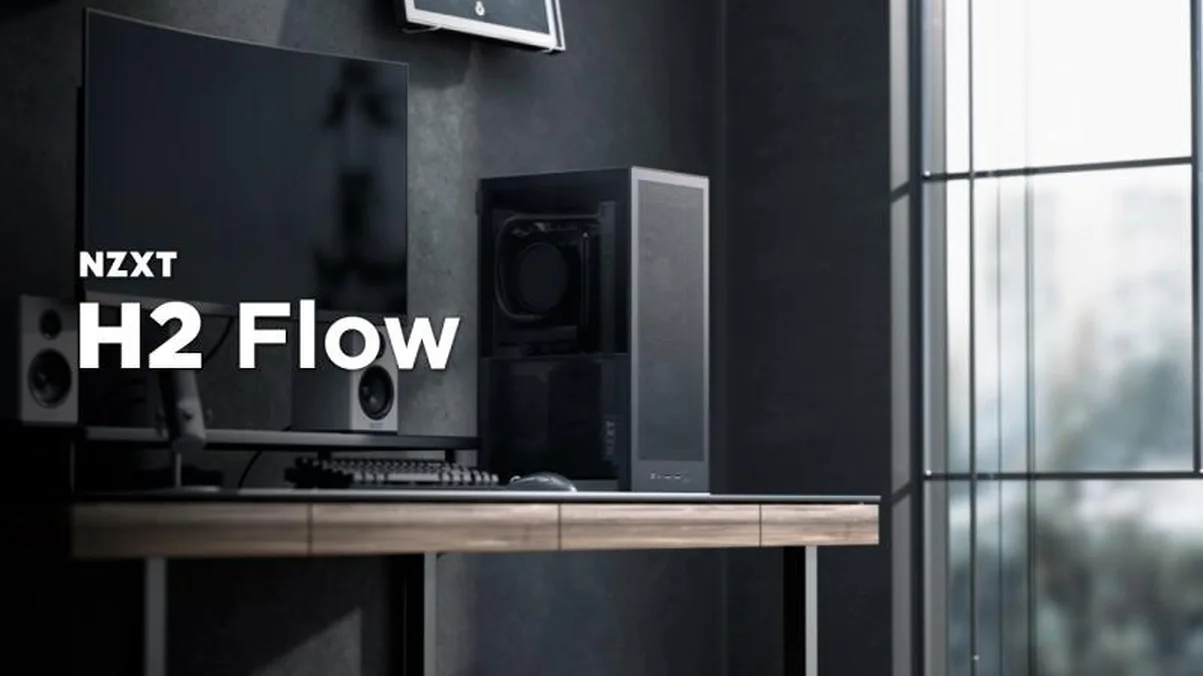
The landscape of PC gaming is continually evolving, and Mini-ITX builds are at the forefront of a significant shift. No longer a niche for extreme enthusiasts, these compact powerhouses represent a growing demand for high-performance rigs that consume minimal desk space. Amidst this revolution, NZXT, a brand deeply rooted in PC component history, is making a definitive statement with its latest offerings. The launch of the H2 Flow Mini-ITX case, alongside the robust C850 SFX Power Supply and the high-end H2 Mini PC, signals NZXT’s re-entry into the highly competitive small form factor market. This move, however, comes with a critical challenge: can NZXT’s latest innovations not only capture the imagination of SFF builders but also rebuild trust amidst past controversies? This analysis will meticulously examine the H2 Flow’s engineering, its accompanying ecosystem, and critically, how NZXT is addressing its legacy to redefine its standing in the future of compact computing.
Key Takeaways
- The H2 Flow: A new vertical Mini-ITX case, boasting high airflow and compatibility with modern, high-end components.
- Ecosystem Expansion: Supported by the compact, ATX 3.1 certified C850 SFX PSU and the powerful H2 Mini PC pre-built system.
- Riser Cable Redesign: NZXT has explicitly addressed past safety concerns, implementing a re-engineered PCIe 5.0 riser in the H2 Flow to prevent short circuits.
- Community Buzz: Initial reception is largely positive for design and buildability, but questions regarding value and brand trust persist.
- Our Verdict: A comprehensive assessment of whether the H2 Flow delivers on its promises and strengthens NZXT’s position in the SFF gaming segment.
H2 Flow: Engineering a Compact Powerhouse
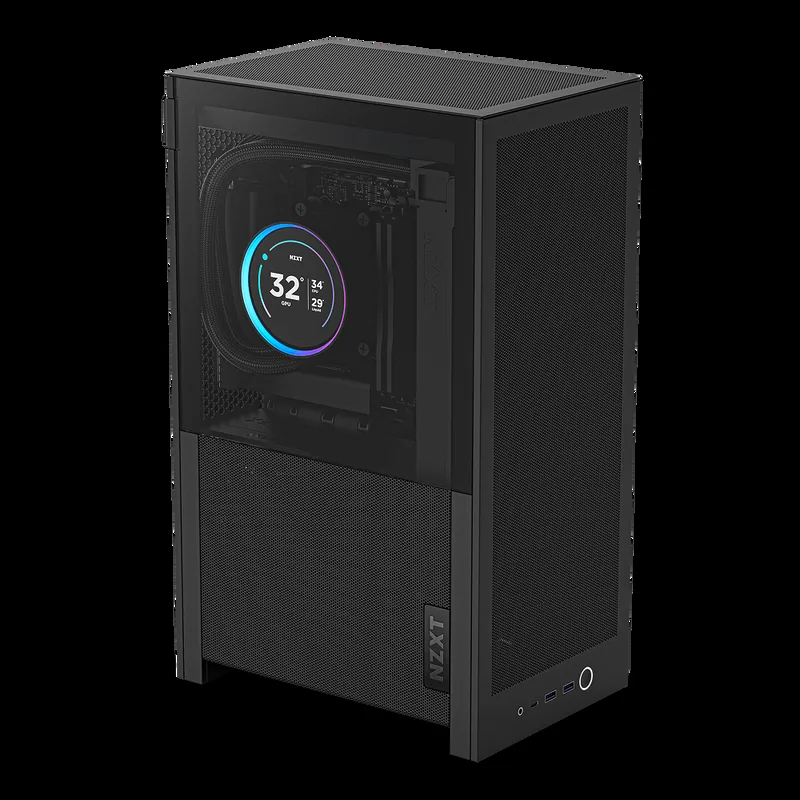
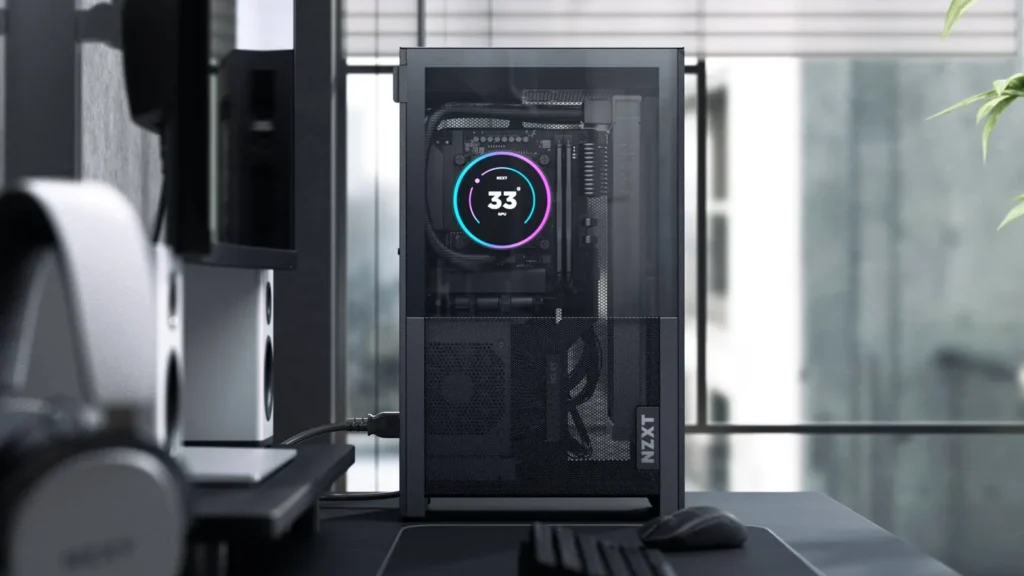

The NZXT H2 Flow represents a significant step forward in their small form factor (SFF) chassis design. This vertical Mini-ITX case, with a modest 20.7L volume, is meticulously engineered to maximize airflow while occupying minimal desk real estate. Its design philosophy prioritizes both accessibility and uncompromising performance. This translates to robust support for AIO liquid coolers up to 280mm and graphics cards up to 331mm, a crucial capability given the ever-increasing size of modern GPUs. For optimal thermal management and dust filtration—critical for system longevity—the H2 Flow features tool-less, fine-mesh panels on all sides. Building in an SFF system can often be a painful experience, but NZXT has streamlined the process by integrating built-in cable routing with Velcro straps and including two pre-installed F120Q exhaust fans. Furthermore, a premium PCIe 5.0 riser cable comes pre-installed for vertical GPU mounting, ensuring both aesthetic appeal and uncompromised performance for high-end graphics cards.
H2 Flow Technical Specifications
| Model | NZXT H2 Flow Mini-ITX Case |
| Form Factor | Mini-ITX |
| Volume | 20.7L |
| Dimensions | 435mm x 181mm x 263mm |
| GPU Clearance | Up to 331mm |
| AIO Support | Up to 280mm |
| Included Fans | 2x F120Q exhaust |
| PCIe Riser | Pre-installed PCIe 5.0 |
Pros
- Compact 20.7L vertical SFF layout saves desk space.
- Excellent airflow with mesh panels on all sides.
- Supports large GPUs (up to 331mm) and 280mm AIOs.
- Tool-less panels and integrated cable management simplify building.
- Pre-installed PCIe 5.0 riser for vertical GPU mounting.
Cons
- Higher price point ($149.99).
- Mini-ITX limits expansion slots and drive bays.
- Awkward underside cable routing.
The Ecosystem: Powering Performance with C850 SFX & H2 Mini PC
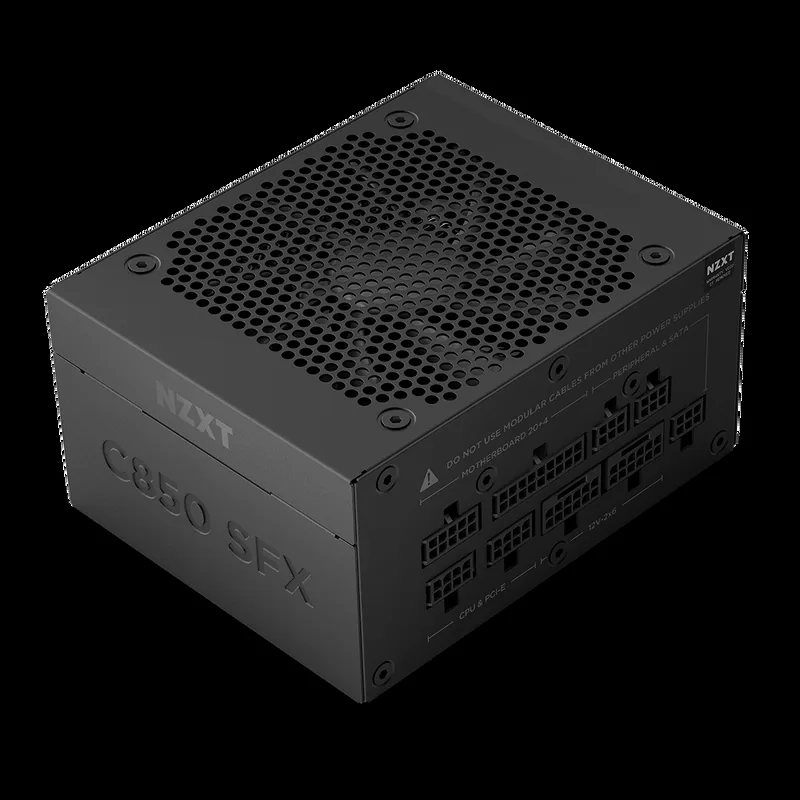
A high-performance small form factor build demands a power supply that is both compact and robust. NZXT answers this call with the C850 SFX Power Supply. This fully modular 850-watt unit is ATX 3.1 certified, ensuring full compatibility with the latest generation of power-hungry graphics cards, including the crucial dedicated 600W 12V-2×6 connector. It boasts impressive 80 Plus Gold and Cybenetics Platinum efficiency ratings, translating to less wasted energy and lower operating temperatures. Marco Esposito, our Senior Hardware Editor, often emphasizes the importance of component quality for long-term reliability; here, the C850 SFX delivers with 100% Japanese capacitors rated at 105°C and an industry-leading 10-year warranty.
| Wattage | 850W |
| Standard | ATX 3.1 Certified |
| Efficiency | 80 Plus Gold / Cybenetics Platinum |
| GPU Connector | 600W 12V-2×6 |
| Warranty | 10 Years |
For those who prefer a ready-to-game solution, NZXT also introduced the H2 Mini PC, a pre-built system expertly housed within the H2 Flow case. Configurations include a choice between an AMD Ryzen 7 9800X3D or an Intel Core Ultra 9 285K Arrow Lake CPU, both paired with a formidable Gigabyte NVIDIA GeForce RTX 5080 graphics card. Interestingly, while NZXT launched its own C850 SFX PSU, the pre-built H2 Mini PCs come with a Lian Li SP850G.B 850W SFX power supply.
NZXT H2 Mini PC: AMD vs. Intel Configurations
| Component | AMD Configuration | Intel Configuration |
|---|---|---|
| CPU | AMD Ryzen 7 9800X3D | Intel Core Ultra 9 285K |
| Motherboard | Gigabyte B850I AORUS Pro | Gigabyte Z890I AORUS Ultra |
| Graphics | RTX 5080 | RTX 5080 |
| RAM | 32GB DDR5-4800 | 32GB DDR5-4800 |
| Price | $3,499 | $3,499 |
Beyond the Hype: NZXT’s Commitment to Safety & Trust
In the fiercely competitive PC building market, consumer trust is not just a metric; it’s the bedrock of a brand’s reputation. NZXT has, in the past, faced significant scrutiny—most notably concerning the fire hazard associated with the PCIe riser cable in their original H1 Mini-ITX case. With the H2 Flow, NZXT has made a conscious, explicit effort to address these past concerns directly. The new design incorporates a shoulder standoff, physically preventing screw contact with the PCB.
“We’re addressing recent community concerns about the H2 Flow PCIe 5.0 riser card design — here’s a full breakdown of the engineering decisions that make it safe, and why it’s built differently from the H1.” – NZXT Official Statement
H2 Flow PCIe Riser: Safety First
NZXT states the H2 Flow’s PCIe 5.0 riser cable features a shoulder standoff design to prevent screw contact with the PCB and utilizes ground-only copper layers around screw holes. This approach aims to definitively prevent the short-circuit issues seen in the H1.
Community Resonance & The Competitive Landscape
The release of the H2 Flow has ignited considerable discussion. Our analysis reveals a strong sense of ‘Appreciation’ for the aesthetics, though ‘Concern’ persists regarding the $149.99 price point when compared to rivals like the Cooler Master NR200.
| Feature | NZXT H2 Flow | Corsair 2000D | Cooler Master NR200 |
|---|---|---|---|
| Volume | 20.7L | 24.4L | 18.25L |
| GPU Max | 331mm | 320mm | 330mm |
| Price | $149.99 | ~$100 | $80-$100 |
LoadSyn’s Definitive Analysis
Final Verdict: The NZXT H2 Flow is a carefully considered statement. Its sleek vertical design and proactive safety efforts with the re-engineered PCIe 5.0 riser are crucial steps toward rebuilding trust. While premium-priced, it justifies the cost for enthusiasts seeking a powerful, easy-to-build, and aesthetically pleasing SFF system.