AMD Ryzen 9 9900X: Zen 5’s Efficient Powerhouse for the AM5 Platform
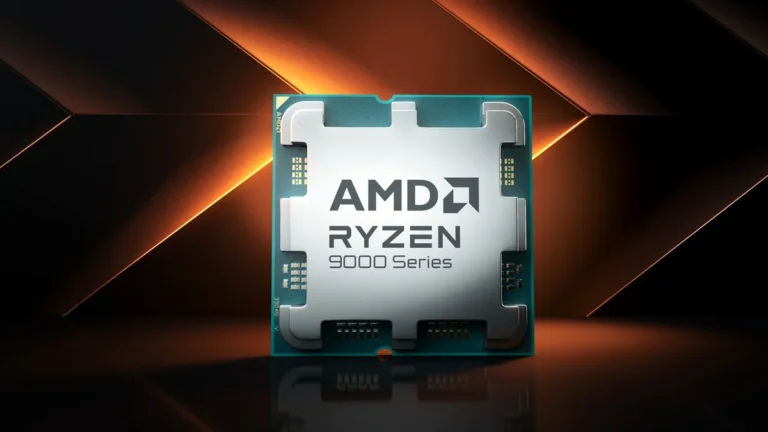
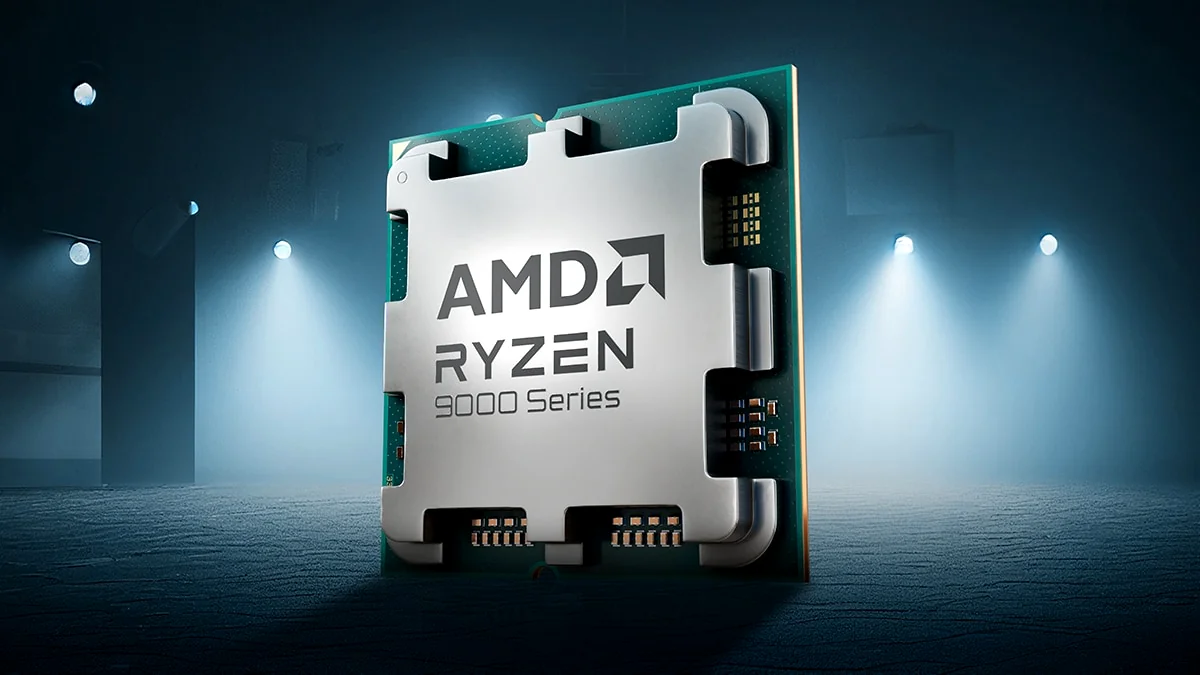
The launch of AMD’s Zen 5 architecture marks a significant leap forward in desktop computing, and at the heart of this revolution for the AM5 platform lies the AMD Ryzen 9 9900X. Positioned as a formidable 12-core, 24-thread solution, this processor is engineered to strike a masterful balance between demanding productivity tasks and high-fidelity gaming. Our comprehensive guide will delve deep into its groundbreaking architecture, dissect its real-world performance metrics, and ultimately assess its value proposition for builders and enthusiasts. The Ryzen 9 9900X isn’t just another CPU; it’s Zen 5’s efficient powerhouse, designed to redefine expectations.
Key Takeaways
- Zen 5 IPC Gains: Delivers an average 16% IPC uplift over Zen 4, boosting both single-core and multi-core performance.
- Efficient Powerhouse: Operates at a 120W TDP (50W lower than its predecessor, the 7900X) resulting in significantly cooler temperatures and better power efficiency.
- Balanced Performance: The 12-core/24-thread configuration excels in demanding productivity tasks and offers very strong, competitive gaming performance, often matching or surpassing Intel’s i7-14700K.
- Exceptional Value on AM5: Launched at a lower MSRP than its predecessor, with continued AM5 platform support through 2027+, ensuring upgrade longevity and a compelling cost-per-frame/workload ratio.
- Overclocking Friendly: Fully unlocked and highly tunable with PBO2, Curve Optimizer, and EXPO, allowing enthusiasts to push performance further.
The Zen 5 Microarchitecture: A Foundation for Next-Gen Performance
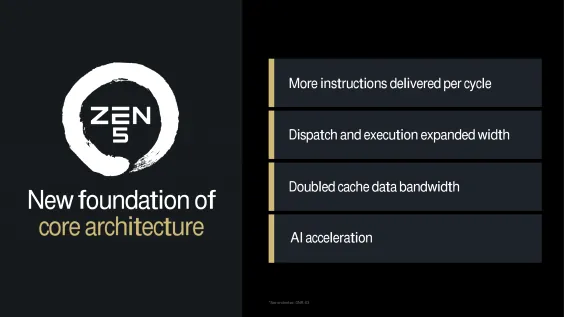
The AMD Ryzen 9000 series owes its impressive capabilities to the underlying Zen 5 microarchitecture, which introduces a host of significant advancements over its Zen 4 predecessor. Central to these improvements is an average 16% uplift in Instructions Per Clock (IPC), a gain that translates directly into faster execution across a wide range of workloads. This boost is largely driven by a completely redesigned front-end, featuring enhanced branch prediction accuracy and lower latency, ensuring the CPU can anticipate and fetch instructions more efficiently. Coupled with wider pipelines and expanded dispatch/execute units, Zen 5 can process more instructions per clock cycle, maximizing throughput. Furthermore, the architecture now boasts doubled AVX-512 throughput with a full 512-bit Floating-Point Unit (FPU), a critical enhancement for AI, scientific computing, and other vector-intensive tasks. All these innovations are brought to life on TSMC’s advanced 4nm manufacturing process for the Core Complex Dies (CCDs), enabling higher transistor density and improved power efficiency. Collectively, these architectural refinements deliver substantial gains in both single-core responsiveness, crucial for gaming and lightly-threaded applications, and multi-core muscle, vital for complex content creation and productivity workloads.
- Up to 16% Instructions Per Clock (IPC) improvement over Zen 4.
- Built on a new TSMC 4nm process node for CPU cores, with a 6nm IOD for efficiency.
- Features a full 512-bit Floating-Point Unit (FPU) for doubled AVX-512 and VNNI throughput, significantly boosting AI performance.
- Completely redesigned front-end with improved branch prediction accuracy and lower latency.
- Wider dispatch and execute units, enabling more instructions to be processed per clock cycle.
- Increased L1 Data Cache (D-Cache) from 32KB 8-way to 48KB 12-way per core, reducing memory latency.
AMD Ryzen 9 9900X: Technical Specifications
| Feature | Specification |
|---|---|
| Name | AMD Ryzen 9 9900X |
| MSRP (Launch) | $499 |
| Release Date | August 15, 2024 |
| Socket | AM5 |
| Cores / Threads | 12 Cores / 24 Threads |
| Base Clock | 4.4 GHz |
| Max Boost Clock | Up to 5.6 GHz |
| L1 Cache | 960 KB (80KB per core) |
| L2 Cache | 12 MB (1MB per core) |
| L3 Cache | 64 MB (shared) |
| Integrated Graphics | AMD Radeon Graphics (2 CUs, 2200 MHz) |
| Default TDP | 120W |
| Memory Support | DDR5 |
| Native Memory Speed | 5600 MT/s |
| CPU Core Process Size | TSMC 4nm FinFET |
| I/O Die Process Size | TSMC 6nm FinFET |
| Codename | Granite Ridge |
| Max. Operating Temperature (Tjmax) | 95°C |
| PCI Express Version | PCIe 5.0 |
| Native PCIe Lanes | 28 (24 usable) |
| Unlocked for Overclocking | Yes |
Positioning in the Ryzen 9000 Series and Competitive Landscape
The Ryzen 9 9900X carves out a strategic niche within the Zen 5 lineup, offering a potent 12-core/24-thread configuration that aims for a sweet spot between raw core count and balanced performance. It sits comfortably below the flagship 16-core/32-thread Ryzen 9 9950X, which targets the absolute peak of multi-threaded workloads, and above the more mainstream 8-core/16-thread Ryzen 7 9700X. What truly sets the 9900X apart from its direct predecessor, the Ryzen 9 7900X, isn’t just the Zen 5 architectural enhancements, but a dramatic improvement in efficiency. Despite maintaining the same core and thread count, the 9900X operates at a significantly lower 120W TDP, a substantial reduction from the 7900X’s 170W. This efficiency gain, driven by the refined 4nm process and Zen 5’s IPC uplift, allows the 9900X to deliver superior performance while running cooler and consuming less power, making it a more attractive option for a wider range of PC builds.
| CPU Model | Architecture | Cores / Threads | Max Boost | Total Cache | TDP | MSRP |
|---|---|---|---|---|---|---|
| AMD Ryzen 9 9900X | Zen 5 | 12 / 24 | 5.6 GHz | 76 MB | 120W | $499 |
| AMD Ryzen 9 9950X | Zen 5 | 16 / 32 | 5.7 GHz | 80 MB | 170W | $649 |
| AMD Ryzen 9 7900X | Zen 4 | 12 / 24 | 5.6 GHz | 76 MB | 170W | $549 |
| Intel Core i7-14700K | Raptor Lake R | 20 (8+12) | 5.5 GHz | 33 MB | 125W/253W | $409 |
Performance Analysis & Benchmarks: Gaming and Productivity
The Ryzen 9 9900X brings a robust performance profile to the table, demonstrating particularly strong multi-threaded capabilities that make it a formidable choice for productivity and content creation workloads. Thanks to the significant 16% IPC gains of the Zen 5 architecture, tasks like video rendering, 3D modeling, and software compilation see a substantial uplift, often putting it on par with or even exceeding Intel’s direct competitors.
Multi-Core Performance: Cinebench R23 (Higher is Better)
Gaming Performance: Relative Average FPS (Higher is Better)
The gaming performance of the Ryzen 9000 series, particularly the non-X3D parts like the 9900X, has seen a somewhat mixed reception. While Zen 5 undeniably brings significant IPC gains and reduced latencies, AMD’s own 7000X3D series, with its 3D V-Cache technology, often maintains a slight lead in pure gaming scenarios. However, the gap is narrowing considerably, and for professional users on Linux, the Ryzen 9000 series demonstrates exceptional performance, highlighting its versatility as a true hybrid powerhouse.
Efficiency Redefined: Power Consumption and Thermals
One of the most impressive aspects of the Ryzen 9 9900X is its outstanding power efficiency and thermal management. Operating at a 120W TDP, it represents a substantial 50W reduction compared to its Zen 4 predecessor. In stress tests, the 9900X typically hovers around 80°C under full load, a stark contrast to the 95°C of the 7900X or the even higher 100°C often seen with Intel’s Core i7-14700K.
Power (W) & Max Temperature (°C) Under Load
Unleashing Potential: Overclocking and Tuning
For enthusiasts eager to extract every last drop of performance, the Ryzen 9 9900X offers a robust suite of overclocking and tuning capabilities. AMD has refined its Precision Boost Overdrive 2 (PBO2) toolkit, providing advanced controls for dynamic frequency scaling.
- Precision Boost Overdrive 2 (PBO2): Enhanced toolkit for dynamic frequency tuning.
- Fmax Boost Override: Fine-tune max boost frequency with 1 MHz granularity, up to +200 MHz.
- Scalar (10X): Allows Precision Boost to pursue higher voltages by overriding silicon stress limits.
- Curve Optimizer: Undervolt individual cores to reduce heat and gain headroom.
- AMD EXPO Technology: Simplified memory overclocking for DDR5 (DDR5-8000+).
Pros
- Excellent Power Efficiency (120W TDP)
- Runs significantly cooler than predecessors
- Strong Multi-threaded Performance (16% IPC uplift)
- AM5 Platform Longevity (Support through 2027+)
- Lower Launch MSRP than 7900X
Cons
- Not the absolute Gaming King (7000X3D still leads)
- Base Clock Reduction from Zen 4
- No Bundled Cooler included
- Dual-CCD design can cause minor software inconsistencies
The Fandom Pulse: Community Sentiment
“Price 😬”
The community’s reception of the Ryzen 9 9900X and the broader Zen 5 lineup has been a fascinating blend of anticipation and anxiety. There’s palpable excitement for the architectural advancements and efficiency gains Zen 5 promises, especially after the solid foundation laid by Zen 4. However, this enthusiasm is often tempered by a pervasive concern over pricing.
Final Verdict: Zen 5’s Efficient Powerhouse
The AMD Ryzen 9 9900X stands as a pivotal release for the Zen 5 architecture, delivering a compelling blend of raw power and remarkable efficiency. Its 12-core design, bolstered by a significant 16% IPC uplift and a refined 4nm process, makes it an outstanding choice for demanding productivity tasks. While it may not dethrone the 7000X3D series as the absolute gaming king, its performance is highly competitive. For system builders prioritizing a quiet, cool, and stable rig with long-term platform support, the 9900X is an undeniable frontrunner.
Frequently Asked Questions
Is the AMD Ryzen 9 9900X good for gaming?
Yes, the Ryzen 9 9900X offers very strong gaming performance. While AMD’s 7000X3D series might still hold a slight edge for absolute peak FPS in some titles, the 9900X is highly competitive and often matches or surpasses Intel’s current top-tier gaming CPUs.
Does the Ryzen 9 9900X require a new motherboard?
No, if you already own an AM5 motherboard (e.g., X670E, B650), you can upgrade to the Ryzen 9 9900X with a simple BIOS update. AMD is committed to supporting the AM5 platform through 2027 and beyond.
How does it compare to Intel’s Core i7-14700K?
The Ryzen 9 9900X offers comparable performance but with significantly lower power consumption (120W TDP vs. 253W Max Turbo Power) and much cooler operating temperatures.