Key Takeaways
The current memory market is experiencing a significant upheaval, dubbed the ‘RAMpocalypse,’ primarily due to unprecedented AI server demand diverting DDR5 production and driving prices sky-high. For PC builders, this means individual DDR5 components, especially high-capacity kits like 64GB, are prohibitively expensive. Surprisingly, prebuilt gaming PCs are emerging as a potential value proposition. Manufacturers often secure bulk pricing, allowing them to offer systems with generous 64GB DDR5 at an effective cost far below what a custom builder would pay for the RAM alone. While 64GB of DDR5 is largely overkill for pure gaming, offering diminishing returns beyond 32GB, it proves invaluable for professional content creation, complex simulations, AI development, and heavy multitasking, where its increased bandwidth and capacity genuinely accelerate workflows.
Introduction: The RAMpocalypse Unpacked
The landscape of PC hardware is currently embroiled in an unprecedented crisis, a phenomenon we at LoadSyn have termed the ‘RAMpocalypse.’ The core of this upheaval lies in the volatile DRAM market, where DDR5 memory prices have surged to exorbitant levels. This dramatic inflation isn’t a simple market fluctuation; it’s a direct consequence of a paradigm shift in global technology. Unprecedented demand from the burgeoning AI sector, coupled with strategic production shifts by major memory manufacturers towards higher-margin server and HBM memory, has created a severe supply bottleneck for consumer-grade DDR5. As GamersNexus reported, some memory kits have seen price increases of over 180% in mere months, with high-capacity options soaring by hundreds of dollars. This leaves PC builders and gamers in a profound dilemma: how to navigate prohibitive costs while still seeking value, especially for performance-critical components like high-capacity RAM. The community’s frustration is palpable, with many expressing resignation at the prospect of being forced onto older platforms or delaying upgrades indefinitely.
DDR5 vs. DDR4: A Quick Technical Overview
| Feature | DDR4 (Typical) | DDR5 (Typical & Launch) |
|---|---|---|
| Data Rate (Frequency) | 2133 – 3200 MT/s | 4800 – 8400+ MT/s |
| Operating Voltage | 1.2V | 1.1V |
| Max Capacity (Per DIMM) | 32GB (Consumer), 64GB (Server) | 64GB (Consumer), 128GB (Server) |
| Burst Length (BL) | BL8 | BL16 |
| Channel Architecture | Single 64-bit Channel | Two Independent 32-bit Channels |
| Power Management | Motherboard-based | On-DIMM PMIC |
| Error Correction | None (ECC on Server only) | On-Die ECC (ODECC) |
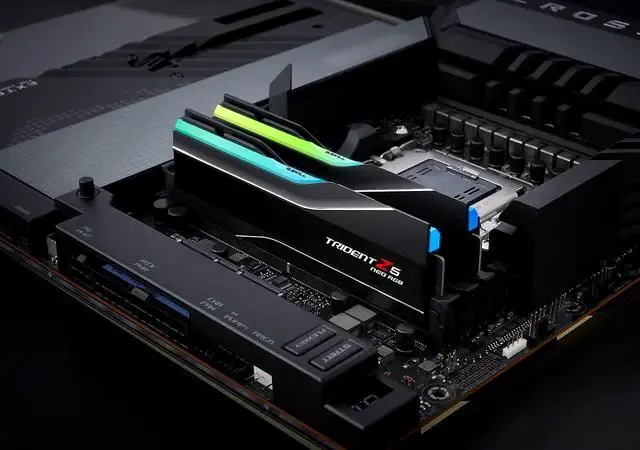
Beyond raw speed, the architectural underpinnings of DDR5 represent a significant leap over its predecessor. As our comparison table illustrates, DDR5 modules employ a dual independent 32-bit channel architecture per DIMM, effectively doubling the internal channel count compared to DDR4’s single 64-bit channel. This fundamental change enhances access efficiency, allowing for more data to be processed concurrently. Furthermore, DDR5 integrates a Power Management Integrated Circuit (PMIC) directly onto the module, shifting voltage regulation from the motherboard to the RAM itself. This on-DIMM PMIC allows for finer control over power delivery, improving stability and efficiency while reducing the operating voltage to 1.1V from DDR4’s 1.2V. Crucially, DDR5 also introduces on-die Error Correction Code (ODECC), bolstering data integrity and reliability—a feature previously largely confined to server-grade ECC memory. While early generations of DDR5 often presented with higher CAS latencies, its superior bandwidth and other advancements typically offset this in demanding applications. However, it is paramount to understand that DDR5 is physically incompatible with DDR4 slots; an upgrade necessitates a complete platform overhaul, including a new motherboard and compatible CPU, adding to the overall cost.
The ‘RAMpocalypse’ Defined: Why Memory Prices Exploded
- Massive AI Server Demand: The insatiable appetite of AI data centers for high-capacity, high-bandwidth memory is the primary catalyst. Projects like OpenAI’s ‘Stargate’ are reportedly targeting 900,000 wafer starts per month, consuming an estimated 40% of global DRAM output (GamersNexus, Tom’s Hardware). This colossal demand for AI-specific memory, including HBM (High Bandwidth Memory) and high-density server DDR5, directly depletes the manufacturing capacity available for consumer desktop RAM.
- Strategic Production Cuts: Following a period of oversupply in late 2022 and early 2023, major memory manufacturers like Samsung, SK Hynix, and Micron strategically reduced production to stabilize prices. While this was a response to a previous market downturn, it left them unprepared for the sudden, unprecedented surge in AI demand (GamersNexus).
- Shift to Higher-Margin Memory: With AI and server memory commanding significantly higher profit margins (HBM, for instance, consumes over three times the wafer capacity of standard DRAM but offers greater returns), manufacturers are actively prioritizing their wafer production towards these lucrative segments. This deliberate redirection of resources away from consumer desktop DDR5 naturally constricts supply and inflates prices (GamersNexus, Wccftech). As Micron’s CEO Sanjay Mehrotra stated, this isn’t a blip but a “multi-year structural shortage,” with the company already having locked in clients for its entire 2026 HBM supply (Yahoo Finance).
“The severity of this market shift is perhaps best encapsulated by industry leaders themselves. Micron CEO Sanjay Mehrotra recently articulated the new reality, stating that the AI-driven memory crunch is not merely a transient phase but rather a ‘multi-year structural shortage, impeding its ability to supply its clients.’ This declaration underscores a fundamental and lasting change in the dynamics of the memory market.”
DDR5 Price Trend (2023-2026)
Visual representation of retail DDR5 price trajectory during the AI surge.
The Gamer’s Dilemma: Impact on Performance & Budgets
The exorbitant cost of DDR5 creates a distinct dilemma, segmenting its impact across different user profiles. For the vast majority of pure gamers, the allure of ultra-fast DDR5 often encounters the harsh reality of diminishing returns. As our research consistently shows, if your system’s primary bottleneck is the Graphics Processing Unit (GPU)—a common scenario, especially at higher resolutions like 1440p or 4K—the significant premium paid for bleeding-edge DDR5 speeds yields minimal, often imperceptible, real-world frame rate improvements. This fuels a pervasive skepticism within the gaming community: why invest hundreds more for a few extra frames per second when that budget could upgrade the GPU instead? Conversely, for content creators, 3D modelers, video editors (particularly 8K workflows), and heavy multitaskers running numerous demanding applications simultaneously, DDR5’s increased bandwidth and capacity truly shine. Here, the ability to rapidly process large datasets, render complex scenes, or seamlessly switch between memory-intensive tasks offers tangible productivity gains and a smoother, more responsive workflow.
Pros
- Future-Proofing: Adopting DDR5 positions your system for future hardware generations.
- Higher Bandwidth: Critical for 8K editing, 3D rendering, and AI training.
- Better 1% Lows: Improved consistency in CPU-bound gaming scenarios.
Cons
- Prohibitive Cost: Massive price inflation compared to DDR4.
- Minimal Gaming Uplift: Negligible gains at 1440p/4K resolutions.
- Platform Overhaul: Requires new motherboard and CPU.
Prebuilt PCs: An Unexpected Value Haven?
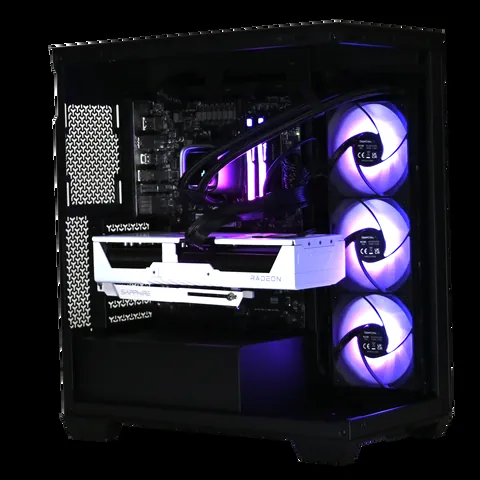
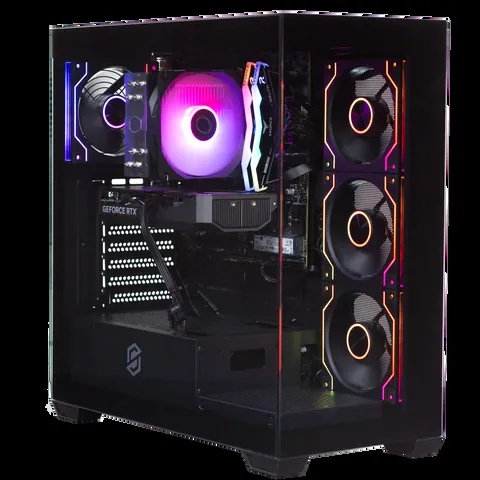
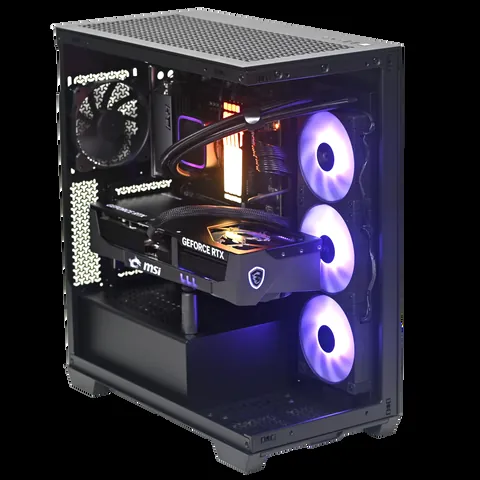
In a market where individual component prices are spiraling out of control, particularly for DDR5 memory, an unexpected paradigm shift is occurring: prebuilt gaming PCs are emerging as a compelling, and often superior, value proposition. Historically, custom building offered unmatched flexibility and cost efficiency. However, in the current ‘RAMpocalypse’ scenario, this dynamic has inverted. Prebuilt manufacturers, armed with immense bulk purchasing power and established supply chain agreements with memory suppliers, can often secure DDR5 modules at prices far below what a retail consumer would pay. This allows them to absorb a significant portion of the DDR5 inflation or pass on more favorable pricing within a complete system package. Consequently, acquiring high-capacity RAM, such as 64GB DDR5, as part of a prebuilt system can be surprisingly more ‘affordable’ and economically sensible than attempting to purchase the same memory kit, a compatible motherboard, and a CPU separately. For many, this represents the most viable path to accessing cutting-edge DDR5 technology without incurring prohibitive individual component costs.

| Scenario | 64GB DDR5 (Individual) | 64GB DDR5 (Prebuilt Est.) | Savings |
|---|---|---|---|
| High-End Gaming (RTX 5090) | $700 – $1000+ | $300 – $500 | $400 – $700+ |
| Mid-Range Content Creation | $500 – $800 | $250 – $400 | $250 – $400 |
| Multitasking/Streaming PC | $600 – $900 | $300 – $450 | $300 – $450 |
Pro-Tip for Savvy Shoppers: When scrutinizing prebuilt PC deals, resist the urge to focus solely on the CPU and GPU. Instead, take a moment to actively calculate the implied value of the included high-capacity DDR5 RAM. Compare the system’s overall price against the current market cost of an equivalent 64GB DDR5 kit purchased individually.
Beyond 32GB: Is 64GB DDR5 Overkill or Essential?
The question of whether 64GB of DDR5 RAM is an essential upgrade or simply overkill is a nuanced one, heavily dependent on your specific use case. For the vast majority of pure gaming scenarios, 32GB of DDR5 is currently more than sufficient, providing ample headroom for even the most demanding titles, alongside typical background applications. Our extensive testing, and general industry consensus, indicates that the performance uplift for gaming beyond 32GB is often negligible, making further investment in capacity a poor return for pure gameplay. However, for a distinct segment of power users, 64GB DDR5 transitions from a luxury to a tangible necessity. Professionals engaged in 8K video editing, complex 3D rendering, large-scale software development environments, AI model training, or heavy streamers who concurrently run multiple virtual machines and dozens of browser tabs will experience genuine, measurable benefits. In these demanding workflows, 64GB ensures multitasking stability, accelerates processing times, and eliminates frustrating memory bottlenecks, dramatically improving overall productivity.
- AI Model Training: Required for holding datasets in active memory.
- Large-Scale Data Processing: Processing massive databases directly in RAM.
- 8K Video Production: Handling multiple uncompressed streams and effects.
- Complex 3D Rendering: Reduces render times and improves viewport responsiveness.
- Virtualization: Room for multiple concurrent VMs.
- Extreme Multitasking: Lag-free experience with dozens of apps and tabs.
Navigating the Future: Long-Term Strategy
- Honestly Assess Your True Needs: 32GB is still the sweet spot for most.
- Actively Monitor Prebuilt Deals: Often the only economical route for 64GB.
- Consider AMD Zen 3 AM4 Reintroduction: A budget-friendly DDR4 alternative.
- Factor in Total Platform Cost: It’s never just the RAM; it’s the board and CPU too.
- Exercise Caution, Not Panic-Buying: Stay informed and wait for genuine deals.
Final Verdict
In conclusion, the DDR5 market, profoundly impacted by the ‘RAMpocalypse’ driven by AI demand, presents significant challenges for PC enthusiasts and builders alike. However, this turbulent landscape is not without opportunities for the savvy consumer. Our analysis indicates that prebuilt gaming PCs, leveraging manufacturer’s bulk purchasing power, have unexpectedly become the most economical route to acquiring high-capacity DDR5 memory, particularly 64GB kits. For users whose workloads genuinely benefit from this increased capacity—namely content creators, AI developers, and extreme multitaskers—a carefully chosen prebuilt system may offer the best pathway to ‘future-proof’ their setup against ongoing memory inflation. LoadSyn remains committed to providing you with the peer-reviewed technical depth and actionable insights needed to navigate these volatile markets and make informed decisions for your computing future.
Frequently Asked Questions
Is DDR5 worth it for gaming right now?
For most pure gaming scenarios, the performance uplift of DDR5 over optimized DDR4 is often marginal, especially at higher resolutions. Given the current exorbitant prices, it’s generally not the most cost-effective upgrade for gamers unless building a brand-new, no-compromise system.
How much RAM do I really need?
16GB is sufficient for general use. 32GB is the sweet spot for gamers and streamers. 64GB+ is primarily for professional workloads like 8K editing or AI training.
Why are DDR5 prices so high?
Prices are driven by massive AI server demand, strategic production cuts by manufacturers, and a shift towards higher-margin HBM memory for data centers.
Can I upgrade my DDR4 system to DDR5?
No. DDR5 is physically and electrically different. You will need a new motherboard and a compatible CPU.