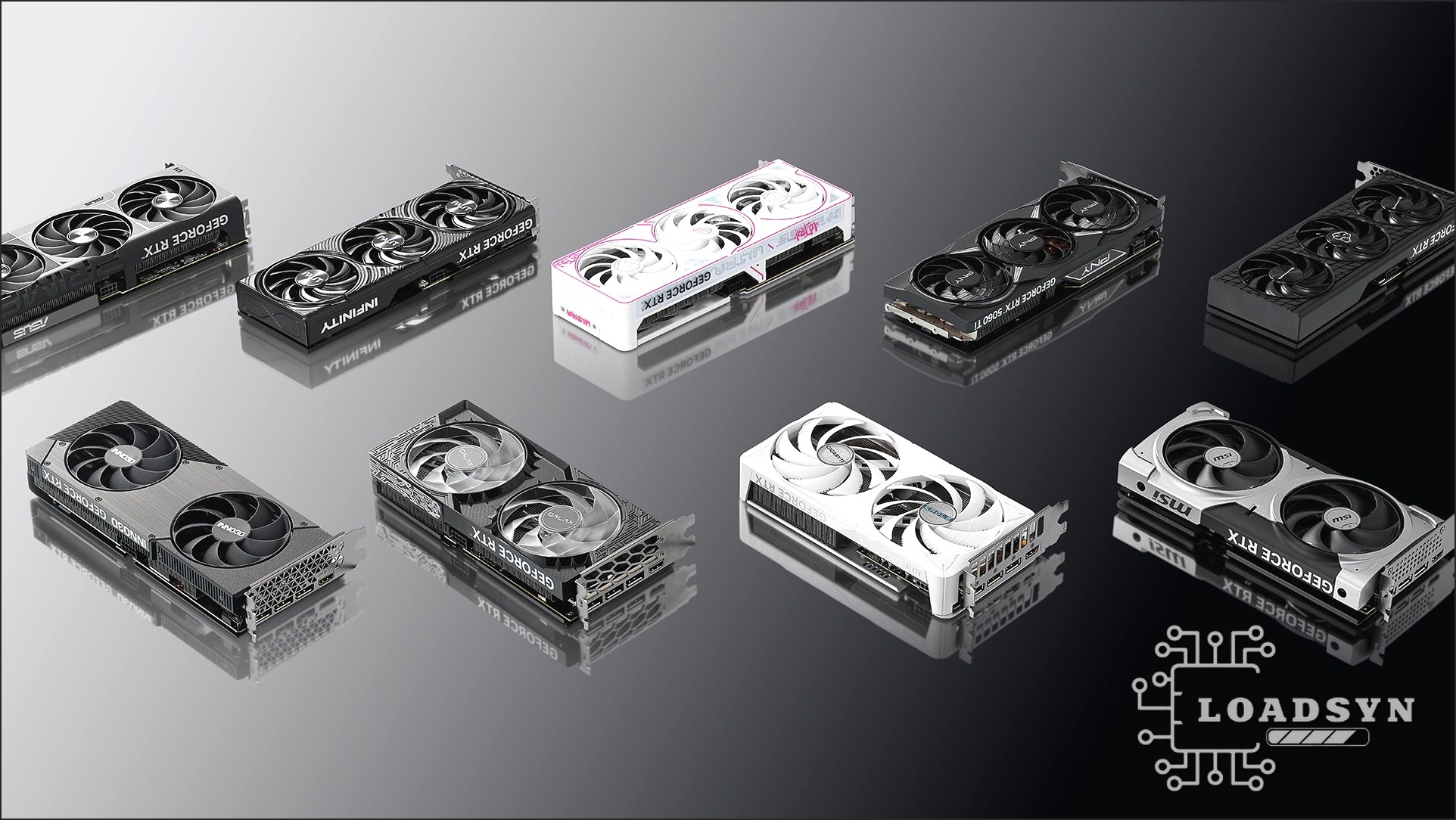

- The RTX 5060 Mobile enters the arena as the definitive budget king, starting at $1,099 with the Blackwell architecture and DLSS 4 frame-gen capabilities.
- The generational leap hinges on GDDR7 memory. However, there is a technical split: mobile variants utilize 24 Gbps GDDR7 (384 GB/s bandwidth), whereas the desktop version uses 28 Gbps (448 GB/s). This is a critical distinction for theoretical peak performance.
- WARNING: The TGP (Total Graphics Power) range is a minefield, spanning 45W to 100W. If your sustained power limit drops below 85W, you risk owning a card that performs worse than a high-TGP RTX 4060. Always verify the wattage before clicking ‘buy’.
- High-TGP implementations, such as the Gigabyte A18 (100W) or the MSI Stealth A16 (90-96W), deliver the best thermal stability and can easily maintain 100+ FPS at 1200p with DLSS 4 enabled.
- New benchmark data reveals a surprisingly narrow performance gap between a high-TGP Mobile 5060 and the 125W Desktop counterpart. In several 1080p titles, the Blackwell architecture’s efficiency allows the mobile chip to punch significantly above its weight class.
The Blackwell Budget Tier: Architecture, Specs, and the GDDR7 Generational Leap
The launch of the RTX 5060 Mobile marks a crucial moment in the budget gaming market. Not only is the starting price of $1,099 strategically lower than the previous generation’s launch price, but NVIDIA has also successfully introduced significant architectural improvements via Blackwell into this high-volume tier. This GPU features 3,328 CUDA cores, 104 texture units, 48 ROPs, 26 Streaming Multiprocessors (SMs), and 26 RT cores, built on TSMC’s advanced 4nm process. The critical inclusion of 8GB of GDDR7 VRAM is the true game-changer. While the increase in raw CUDA core count to 3,328 (from the 4060’s 3,072) is modest, the new GDDR7 memory technology dramatically boosts effective bandwidth. It’s crucial to note that the mobile variant utilizes GDDR7 clocked at 24 Gbps, providing 384 GB/s of bandwidth, whereas the desktop RTX 5060 leverages 28 Gbps GDDR7 for 448 GB/s. This massive increase over the RTX 4060’s 272 GB/s allows the 5060 Mobile to handle the intensive data streams required by high-resolution textures and the advanced neural rendering of DLSS 4, providing a generational leap that the core count alone could not deliver, particularly when operating at higher TGPs.
NVIDIA GeForce RTX 5060 Mobile Technical Specifications (Blackwell GB206)
RTX 5060 Mobile vs. RTX 4060 Mobile: The Bandwidth & Core Gap
| Feature | RTX 5060 Mobile (Blackwell) | RTX 4060 Mobile (Ada) |
|---|---|---|
| VRAM Type | GDDR7 | GDDR6 |
| Memory Bandwidth | 384 GB/s | 272 GB/s |
| CUDA Cores | 3,328 | 3,072 |
| TGP Range | 45W – 100W | 35W – 115W |
Blackwell Mobile vs. Desktop: A Closer Look at the RTX 5060 Architecture
For the first time in a budget-tier launch, NVIDIA has been remarkably transparent about the architectural differences between the mobile and desktop variants of the RTX 5060. Both utilize the GB206 GPU on TSMC’s 4nm process, but the desktop version is a more fully enabled chip. It features 3,840 CUDA cores, 120 texture units, 30 SMs, and 30 RT cores, compared to the mobile’s 3,328 CUDA cores and 26 SMs. Critically, the desktop version also boasts higher base and boost clocks (2280 MHz / 2497 MHz vs. 952 MHz / 1455 MHz for mobile) and faster 28 Gbps GDDR7 memory, resulting in a 448 GB/s bandwidth. This enables the desktop RTX 5060 to achieve 19.18 TFLOPS of FP32 single-precision performance at its 145W TDP, setting a benchmark for what the mobile chip *could* achieve if unshackled. Understanding these foundational differences is key to appreciating the mobile chip’s efficiency at lower power envelopes.

NVIDIA GeForce RTX 5060 Mobile vs. Desktop: Architectural & Performance Summary
| Specification | RTX 5060 Mobile (GB206) | RTX 5060 Desktop (GB206) |
|---|---|---|
| Launch Date | May 20, 2025 | May 19, 2025 |
| CUDA Cores | 3,328 | 3,840 |
| SMs / RT Cores | 26 / 26 | 30 / 30 |
| Boost Clock | 1455 MHz | 2497 MHz |
| VRAM | 8GB GDDR7 (24 Gbps) | 8GB GDDR7 (28 Gbps) |
| Memory Bandwidth | 384 GB/s | 448 GB/s |
| FP32 Performance | 10-14 TFLOPS (Est.) | 19.18 TFLOPS |
| TGP / TDP | 45W – 100W | 145W |
The TGP Trap: Why Power & Thermal Physics Defines Your Purchase
The single greatest variable in RTX 5060 mobile performance is the Total Graphics Power (TGP), which OEMs can set anywhere from 45W to 100W. This isn’t just a number; it’s the thermal and electrical leash that dictates how much performance the GPU can *actually* deliver. This is the single most important metric for any prospective buyer to understand. A low-TGP 5060 will be significantly slower than a high-TGP model, often performing worse than a well-implemented previous-generation GPU that operates with greater thermal and power headroom. For instance, an RTX 4060 in a chassis like the Asus ROG Strix G16 can reach up to 140W with Dynamic Boost, allowing it to sustain much higher clocks than a 45W RTX 5060. This fundamental disparity is fueling user anxiety, as buyers fear being ‘bottlenecked’ by aggressive power limits. We have seen this confusion illustrated perfectly in community discussions, where the fear is that a power-limited RTX 5070 might actually lose a benchmark race to a full-power 5060. In the budget segment, TGP, coupled with a robust cooling system, is the true arbiter of sustained performance, and understanding Dynamic Boost logic is key to avoiding disappointment.
Simulated Performance Scaling: RTX 5060 Mobile TGP Impact (1200p Gaming)
This simulation shows the steep drop-off in sustained frame rates when the RTX 5060 is constrained by low TGP settings. Performance at 50W is halved compared to the ideal 100W implementation, illustrating the severe impact of chassis power limits on the GPU’s clock speed and utilization.
Real-World TGP in Action: RTX 5060 Mobile vs. Desktop Benchmarks (1080p)
To truly understand the impact of TGP and architectural differences, we turn to real-world gaming benchmarks. Our analysis of the RTX 5060 Mobile (tested on an MSI Stealth A16, utilizing 90-96W GPU power) against the RTX 5060 Desktop (drawing 120-125W GPU power) reveals a fascinating trend: the performance gap, while present, is remarkably small in many 1080p titles. This underscores the Blackwell architecture’s efficiency at its upper mobile power limits. However, games like Hogwarts Legacy, which are particularly CPU- and memory-intensive, show a more pronounced advantage for the desktop, highlighting the impact of higher sustained clocks and system power.
RTX 5060 Mobile (90-96W) vs. Desktop (120-125W) – 1080p Gaming
| Game Title | Mobile Avg FPS | Desktop Avg FPS | Desktop % Lead |
|---|---|---|---|
| God of War | 90 | 98 | 8.9% |
| Cyberpunk 2077 | 78 | 81 | 3.8% |
| A Plague Tale: Requiem | 75 | 82 | 9.3% |
| Horizon Zero Dawn | 80 | 81 | 1.3% |
| Forza Horizon 5 | 117 | 123 | 5.1% |
| Hogwarts Legacy | 77 | 99 | 28.6% |
| The Last of Us Part II | 68 | 77 | 13.2% |
| Source: szyunze.com | |||
Case Study: Gigabyte A18 (100W TGP) as the Budget Benchmark & MSI Stealth A16 Performance Validation
The Gigabyte A18, starting at $1,199, exemplifies a successful high-TGP budget implementation and sets the standard for this tier. This chassis successfully integrates the 100W RTX 5060, allowing the GPU to run at its near-maximum potential. Key features include the exceptional battery life, which often exceeds 10 hours of mixed use, doubling the endurance of many rivals. More importantly for performance analysis, the effective WINDFORCE cooling system keeps the GPU operating below 80°C under load, successfully preventing the thermal throttling that plagues lower-TGP designs. While the Gigabyte A18 serves as a conceptual ‘budget king’ for its ideal TGP implementation, real-world data from models like the MSI Stealth A16 (which consistently runs its RTX 5060 Mobile at 90-96W GPU power, as seen in our benchmarks) validate that a well-cooled, high-TGP mobile 5060 can deliver performance surprisingly close to its desktop counterpart. This model proves that high-performance, high-stamina budget gaming laptops are entirely achievable, setting a critical standard against which other $1,100–$1,300 models must now be judged.
- 100W TGP provides near-maximum 5060 performance.
- Exceptional battery life (10-13 hours mixed use).
- Excellent thermal management (below 80°C under load).
- Aggressive pricing ($1,199 base) undercuts rivals.
- CPU (Ryzen 7 260) is slower than Intel equivalents.
- Base display (45% NTSC) lacks color volume.
- Severe performance reduction on battery power (70%+ drop).
Platform Agnostic Performance: Blackwell and the Open-Source Ecosystem
Beyond Windows, the performance of new NVIDIA hardware is increasingly scrutinized within the open-source ecosystem, particularly by Linux and Bazzite users. While specific kernel driver support for Blackwell mobile GPUs is still maturing, early indications from professional-grade Blackwell accelerators (like the RTX 6000D) running OpenCL benchmarks on Rocky Linux 9.4 suggest that NVIDIA is actively working to ensure compatibility and performance. This hints at a future where the RTX 5060 Mobile could offer robust performance on Linux-based gaming distributions, provided manufacturers and the community work together on VBIOS compatibility and power management tools. Enthusiasts keen on ‘TGP modding’ or low-level tuning for platforms like Bazzite on a Gigabyte A16 or similar chassis should anticipate community-driven efforts to unlock and optimize the full TGP potential beyond factory settings, though this always carries inherent risks.
The Fandom Pulse: Why the 5070 Ti Still Looms Large
“Honestly If I was gonna buy a laptop this year I would save up until a 5070Ti falls around $1,200.”
— LoadSyn Fandom Pulse Analysis
Final Verdict
The RTX 5060 Mobile is the new 1080p/1200p performance king when implemented correctly. Its stellar frame rates are largely thanks to the dramatic bandwidth uplift from GDDR7 memory and the sheer scaling power of DLSS 4. However, the market remains a minefield for the uninformed. Our deep dive into the TGP trap and architectural nuances reveals that the performance difference between a 45W and a 100W 5060 is so vast that the TGP rating is more important than the GPU name itself. If you find a model with 85W+ TGP near the $1,100 mark, like the conceptually ideal Gigabyte A18 or the real-world performing MSI Stealth A16, you have secured S-Tier value. The surprisingly close performance to the desktop RTX 5060 at higher mobile TGPs makes it an even more compelling option for efficiency-conscious gamers. For those willing to wait and spend $200 more, the aspirational RTX 5070 Ti remains the true long-term sweet spot, but the high-TGP 5060 Mobile is a formidable contender today.