
Key Takeaways
- Intel is pivoting to a rapid course correction with the Core Ultra Series 3 (Arrow Lake Refresh) in early 2026, but this serves as the final iteration for the LGA 1851 socket.
- The Core Ultra Series 3 primarily offers incremental E-core expansions and native DDR5-7200 support, while critical software patches have finally restored the 6-30% performance lost at the original Series 2 launch.
- The true architectural leap arrives in late 2026 with Nova Lake (Core Ultra Series 4), which introduces the brand-new LGA 1954 socket, rendering LGA 1851 obsolete after just one full generation.
- Nova Lake is engineered to reclaim the gaming crown using the Intel 18A process node, featuring RibbonFET and PowerVia technologies for massive efficiency gains.
- To combat AMD’s X3D dominance, Nova Lake will feature Big Last Level Cache (BLLC), rumored to offer up to 288MB of L3 cache on flagship models.
- With Intel leadership acknowledging Arrow Lake’s competitive shortcomings, enthusiasts are granted ‘permission to wait’ for the 2026 Nova Lake shift, which represents the first ‘complete’ generational leap in years.
The initial launch of Intel’s Arrow Lake-S (Core Ultra Series 2) was marred by inconsistent performance and software scheduling errors, leading to widespread skepticism among the enthusiast community. While Intel has since deployed critical patches to resolve the ‘Missing PPM Package’ disaster, the upcoming Core Ultra Series 3 refresh is increasingly viewed as a temporary bridge. The real focus has shifted toward Nova Lake (Core Ultra Series 4), the true architectural successor slated for 2026. This generation promises to move beyond incremental refreshes, introducing a brand-new socket foundation and the radical ‘Big Last Level Cache’ design. For those weary of platform fatigue, the question is no longer just about how to fix Arrow Lake, but whether to bypass this entire socket cycle in favor of the 18A revolution.
Chapter 1: The Final LGA 1851 Lineup: Core Ultra Series 3 Specs
| SKU | Configuration | P-Core Max Turbo | E-Core Max Turbo | Max Turbo Power | DDR5 Support |
|---|---|---|---|---|---|
| Core Ultra 9 290K+ | 8P + 16E | 5.6 GHz (5.8 GHz TVB) | 4.8 GHz | 250W | 7200 MT/s |
| Core Ultra 7 270K+ | 8P + 16E | 5.4 GHz (5.5 GHz Max) | 4.7 GHz | 250W | 7200 MT/s |
| Core Ultra 5 250K+ | 6P + 12E | 5.3 GHz | 4.7 GHz | 159W | 7200 MT/s |
| Criteria | Core Ultra 7 270K+ (Series 3) | Core Ultra 7 265K (Series 2) | Ryzen 7 9800X3D (AMD) |
|---|---|---|---|
| Core Count (P+E) | 8+16 (24 Total) | 8+12 (20 Total) | 8+0 (8 Total) |
| Max Boost Clock | 5.5 GHz | 5.5 GHz | N/A |
| L3 Cache | 36 MB | 30 MB | 128 MB+ |
| Native Memory Speed | DDR5-7200 | DDR5-6400 | DDR5-6400 |
Chapter 2: The Performance Crisis & The Fix: Root Cause Analysis
The Root Cause: Missing PPM Package
Intel’s investigation found that the single most critical issue was the ‘Missing PPM Package’—a software deployment error where the necessary Power and Performance Management (PPM) Windows Update was incorrectly scheduled for retail availability instead of reviewer availability. This error alone resulted in performance costs ranging from 6% to 30%, causing high run-to-run variation and preventing the Intel Application Performance Optimizer (APO) from functioning. This was a scheduling failure, not a hardware flaw, but it crippled the platform at launch.
The 5 Key Issues and Their Resolutions
- Issue 1: Missing PPM Package (Software): Resolved by updating Windows 11 to build 26100.2161 (KB5044384). This restored proper CPU scheduling and eliminated severe performance variability.
- Issue 2: APO Malfunction (Software): Resulted directly from the Missing PPM Package issue; resolved by the same Windows update, which successfully restored the intended 2-14% performance uplift provided by the Intel Application Performance Optimizer.
- Issue 3: Inconsistent VIP BIOS Settings (Firmware): Early reviewer BIOSes did not consistently toggle crucial settings (including Resizable BAR and compute tile ring frequency) to the most performant state, costing 2-14%. Resolved in current Z890 motherboard BIOS releases.
- Issue 4: Easy Anti-Cheat (EAC) Incompatibility (Software): Causing BSODs in some games due to incompatibility between Windows 11 24H2 and older EAC drivers. Being resolved as Epic Games distributes updated drivers via game updates.
- Issue 5: New Performance Optimizations (Firmware): Microcode 0x114 and CSME Firmware Kit updates are expected in January 2025 to provide a modest single-digit performance improvement through continued platform tuning.
Chapter 3: The Overclocking Angle: The 200S Boost Profile
Boosted from 2.6 GHz to 3.2 GHz, increasing internal link bandwidth.
Boosted DDR5 support from 6400 MT/s to 8000 MT/s, drastically reducing memory latency.
Profile is sanctioned and covered by Intel’s 3-year limited warranty, mitigating enthusiast risk.
Pros and Cons of Utilizing the 200S Boost Profile
Pros
- Warranty Protection: Performance gains are covered by Intel’s 3-year limited warranty, eliminating the risk traditionally associated with overclocking.
- Significant Gains: Offers up to a 7% performance uplift over stock speeds, primarily by reducing the chip-to-chip latency bottleneck.
- Platform Longevity: Maximizes the performance potential of the LGA 1851 platform, providing a high-end ceiling for enthusiasts.
Cons
- Hardware Lock: Requires specific Z890 motherboards and tested XMP memory kits to function properly.
- Cost Barrier: High-speed DDR5-8000 kits compatible with the profile are currently expensive and limited to 1 DIMM per channel configurations.
- Cooling Demands: Increased internal fabric speeds require robust cooling (e.g., 360mm AIO) to maintain turbo clocks without throttling.
Chapter 4: Competitive Reality and the Fandom Pulse
“The PC gaming community views the Arrow Lake Refresh with deep cynicism, assuming it is an overpriced, non-competitive stopgap designed to clear inventory rather than genuinely challenge AMD’s current gaming dominance.”
— LoadSyn Fandom Pulse Analysis
The core issue facing the Arrow Lake architecture is that even with the performance fixes, it remains physically constrained by chip-to-chip latency when compared to AMD’s monolithic-style gaming performance on the 9800X3D. The Core Ultra Series 3 ‘Plus’ refresh adds E-cores, but these do little to address the frame-time consistency issues that gamers actually care about. Intel CFO David Zinsner essentially admitted this by positioning Nova Lake as the ‘more complete’ SKU lineup needed to regain footing. For enthusiasts, the refresh feels like a stopgap because it is one; the real engineering effort is being poured into Nova Lake’s Big Last Level Cache (BLLC), which is specifically designed to kill the ‘X3D-Envy’ that has defined the last two years of the CPU market.
Chapter 5: The Roadmap to LGA 1954: Nova Lake and Beyond
The most significant hurdle for Intel isn’t just performance—it’s platform trust. The upcoming shift to the LGA 1954 socket and the Nova Lake architecture (Core Ultra Series 4) represents a hard reset for Team Blue. While early adopters of LGA 1851 are understandably anxious about their motherboards becoming ‘one-generation bridges,’ Intel’s strategic roadmap suggests that Nova Lake is the first platform in years built to endure. Following a period of institutional distrust and financial adjustments, Intel is betting everything on this 2026 transition to reclaim its dominance from AMD’s Zen 6.
LGA 1954: A New Foundation for Power and I/O
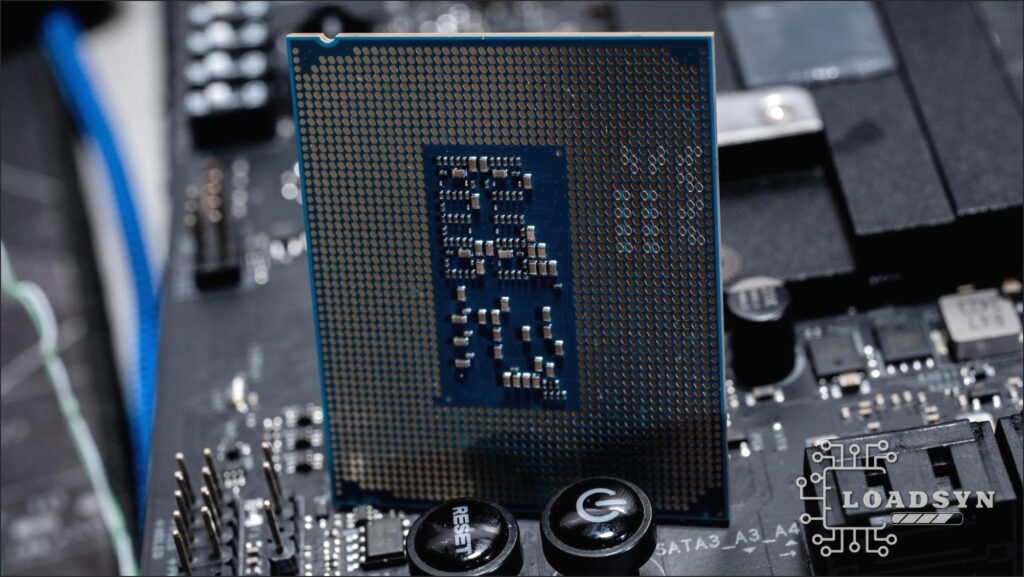
The LGA 1954 socket is more than just a pin-count bump; it is a fundamental rework of the CPU-to-motherboard interface. Leaked shipping manifests confirm 1,954 electrically active pins, with total counts likely exceeding 2,000 to accommodate advanced debugging and expanded power delivery. This larger footprint is necessary for the increased I/O bandwidth and complex chiplet designs inherent in Nova Lake. While this shift effectively marks LGA 1851 as a ‘dead-end’ platform for those looking beyond 2025, the move to 1954 is the only way Intel can support the massive power requirements and signal integrity needed for the 18A process node’s peak performance.
Nova Lake (Core Ultra Series 4): The Architectural Revolution
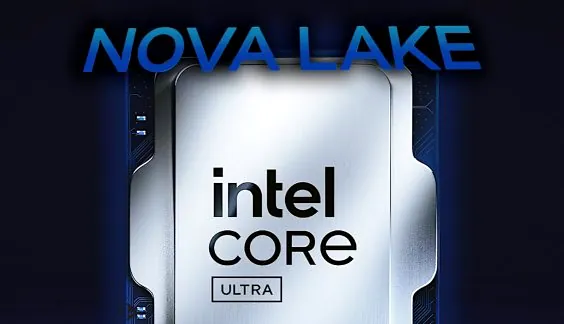
Slated for a late 2026 launch, Nova Lake (Core Ultra Series 4) represents a massive departure from the current architecture. Flagship models are rumored to feature a staggering 52 cores, utilizing 16 ‘Coyote Cove’ P-cores and 32 ‘Arctic Wolf’ E-cores in a dual-CCX layout. This design mimics AMD’s successful chiplet approach but adds Intel’s own spin with an off-die memory controller (IMC) integrated into the SoC tile. While off-die controllers often raise latency concerns, Intel is reportedly offsetting this with aggressive ring bus frequencies and native support for DDR5-8000 (reaching up to 8800). This is paired with the new XeP3 graphics architecture, promising integrated GPU performance that finally rivals mid-range discrete cards.
Nova Lake’s ‘Big Last Level Cache’ (BLLC): Intel’s 3D V-Cache Rival
To address the ‘X3D-Envy’ that has seen gamers flock to AMD, Nova Lake will introduce Big Last Level Cache (BLLC). Leaks point toward a massive 144MB L3 cache tile on mid-range parts, with flagship enthusiasts potentially seeing up to 288MB of total bLLC. By drastically reducing the need for the CPU to access system RAM during gaming workloads, BLLC aims to eliminate the micro-stuttering and latency penalties that have hampered recent Intel generations.
Intel 18A: The Process Node Powering Nova Lake
The silicon foundation for Nova Lake is the Intel 18A process node, which introduces the revolutionary RibbonFET (Gate-All-Around) transistors and PowerVia (Backside Power Delivery). RibbonFET allows for tighter electrical control and reduced leakage, while PowerVia moves power routing to the back of the wafer to free up signal routing on the front. This combination is expected to deliver 25% more performance at the same voltage compared to the Intel 3 process, with a 36% reduction in power consumption. To ensure supply stability, Intel is adopting a dual-sourcing strategy, potentially fabbing some high-performance compute tiles on TSMC’s 2nm node.

Z990 Chipset and PCIe Gen 6.0 Readiness
The LGA 1954 platform will launch alongside the Z990 chipset, which is designed for PCIe Gen 6.0 readiness. By doubling the bandwidth of Gen 5.0 to 64 GT/s per lane, the Z990 chipset ensures that next-generation NVMe drives and GPUs will have unencumbered access to the CPU. The new socket’s increased pin density allows for more dedicated lanes directly from the CPU to the primary M.2 and PCIe slots, reducing the DMI bottleneck that has occasionally plagued complex multi-drive builds on current Z890 boards.
| SKU | CPU Tile Node | Core Config | Threads | TDP | L3 Cache | bLLC |
|---|---|---|---|---|---|---|
| Core Ultra 9 | N2 x 2 | 16P + 32E | 48 | 150 W | 72 MB | 288 MB |
| Core Ultra 7 | N2 x 2 | 12P + 24E | 36 | 150 W | N/A | N/A |
| Core Ultra 5 | N2 x 1 | 8P + 16E | 24 | 125 W | 36 MB | 144 MB |
The Competitive Landscape: Nova Lake vs. AMD Zen 6
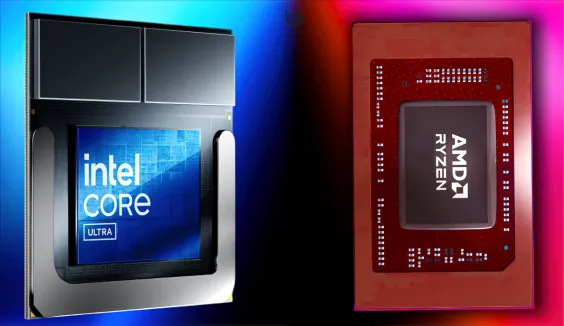
Nova Lake will not launch into a vacuum; it is on a direct collision course with AMD’s Zen 6 (Medusa), also slated for late 2026. While Zen 6 is expected to refine the X3D formula on the TSMC N3P node, Intel’s shift to the 18A node and BLLC represents its first real attempt to fight AMD on its own turf. The competition will likely come down to which architecture handles off-die latency better. With both companies targeting Q4 2026, the market is entering a high-stakes period where the ‘winner’ will be the one who can provide the best balance of multi-core density and gaming-specific cache optimization.
Intel Desktop Client Roadmap: LGA 1851 to LGA 1954
Frequently Asked Questions (FAQ)
Is the Arrow Lake Refresh (Core Ultra Series 3) worth buying if I already have a 14th Gen Intel CPU?
Based on early data, the Core Ultra Series 3 refresh offers marginal gaming uplift over a fully optimized 14th Gen chip. The primary reason to upgrade would be for the guaranteed DDR5-7200 support or if you are building a new system optimized for the 200S Boost profile. However, with Nova Lake on the horizon, many enthusiasts may find it prudent to wait.
Do I need a new motherboard for the Core Ultra Series 3?
No. The Core Ultra Series 3 maintains compatibility with the existing LGA 1851 socket and Z890 chipset. However, you must use the latest Z890 BIOS to access the performance fixes.
Will Nova Lake (Core Ultra Series 4) require a new motherboard?
Yes. Nova Lake marks the transition to the LGA 1954 socket, which is physically and electrically incompatible with LGA 1851.
Final Verdict
The Core Ultra Series 3 (Arrow Lake Refresh) serves as a polished, reliable conclusion to the LGA 1851 era, but it is fundamentally a stopgap. While Intel has fixed the launch-day software disasters, the platform remains a bridge to the future. Our verdict is clear: grant yourself permission to wait. The 2026 arrival of Nova Lake (Core Ultra Series 4) and the LGA 1954 socket represents the first true generational shift since the 12th Gen. With the 18A process node and Big Last Level Cache, Nova Lake is the only upcoming platform with the architectural muscle to genuinely challenge AMD’s X3D dominance. If you aren’t desperate for an upgrade today, hold your ground—the real revolution is just around the corner.