
Key Takeaways
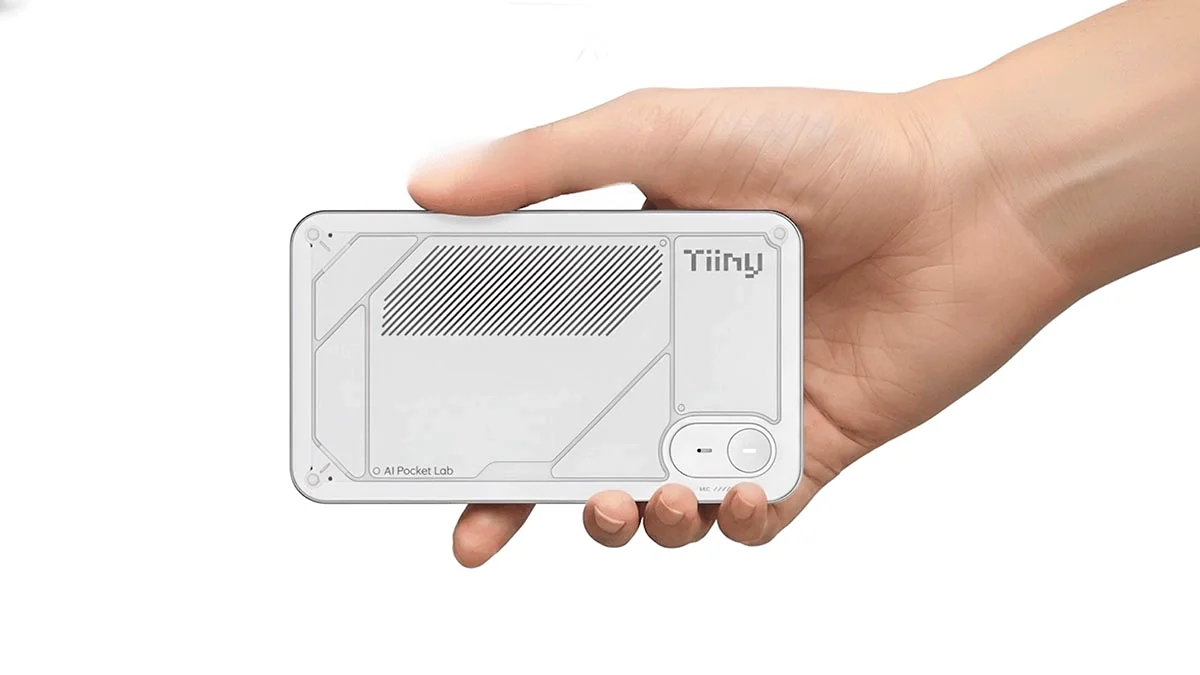
The Tiiny AI Pocket Lab stands as a monumental leap in personal computing, officially recognized by Guinness World Records as the world’s smallest personal AI supercomputer. This device shatters conventional barriers by enabling local execution of 120-billion-parameter Large Language Models (LLMs) without cloud dependency. Its core innovation, leveraging proprietary TurboSparse and PowerInfer technologies, directly addresses the pressing issues of privacy, escalating costs, and environmental impact inherent in cloud-based AI. However, its ambitious entry into the market is met with considerable community skepticism, particularly concerning its pricing, the perceived sufficiency of its VRAM (despite offering 80GB), and the inherent risks associated with Kickstarter fulfillment. This device, while groundbreaking, necessitates a careful evaluation of both its technical prowess and its market reception.
Introduction: The Dawn of Personal AI Supercomputing
The landscape of artificial intelligence is undergoing a profound transformation, shifting from centralized, cloud-dependent architectures to robust, on-device Large Language Models (LLMs). This paradigm shift is fueled by a burgeoning demand for private, secure, and offline AI solutions that empower users without ceding control to external servers. At the forefront of this revolution stands the Tiiny AI Pocket Lab, a device that not only pushes the boundaries of portable computing but also redefines what a personal AI supercomputer can be. Its record-breaking status hints at a future where advanced AI is not just accessible, but truly personal and always at your fingertips.

Breaking Records: What is the Tiiny AI Pocket Lab?
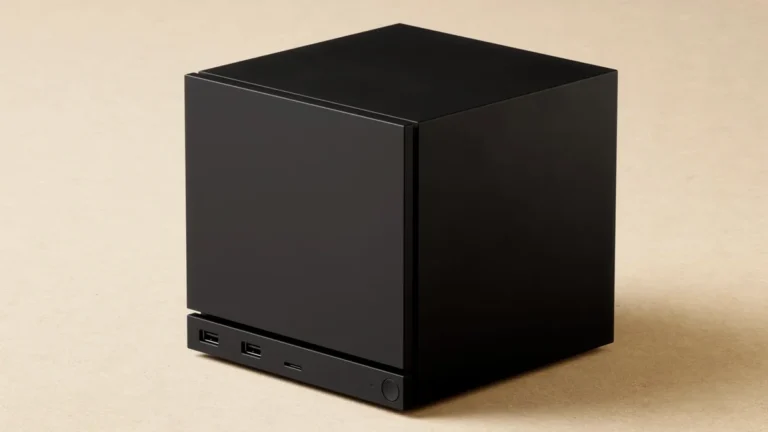
The Tiiny AI Pocket Lab has officially cemented its place in history, verified by Guinness World Records as ‘The Smallest MiniPC (100B LLM Locally)’. This isn’t merely a title; it signifies a pivotal engineering achievement. We are talking about a device so compact it fits in your pocket, yet capable of running a full 120-billion-parameter LLM entirely on-device. This means no reliance on cloud connectivity, no remote servers, and no need for prohibitively expensive high-end GPUs. Its global debut at CES 2026 underscored its readiness to disrupt the status quo, demonstrating server-grade AI capabilities in a consumer-grade form factor.
“Cloud AI has brought remarkable progress, but it also created dependency, vulnerability, and sustainability challenges. With Tiiny AI Pocket Lab, we believe intelligence shouldn’t belong to data centers, but to people. This is the first step toward making advanced AI truly accessible, private, and personal, by bringing the power of large models from the cloud to every individual device.”
— Samar Bhoj, GTM Director of Tiiny AI
Why Local AI? The Case Against Cloud Dependency
The burgeoning reliance on cloud-based AI, while offering undeniable convenience, has introduced a host of critical vulnerabilities and inefficiencies. From pervasive privacy risks, where sensitive data is routinely transmitted and processed on external servers, to the escalating energy consumption and carbon footprint of massive data centers, the downsides are becoming increasingly apparent. Furthermore, the prohibitive costs associated with long-context processing, the fragility of global outages, and the inherent dependency on external service providers paint a clear picture: the current model is unsustainable for truly personal and pervasive AI. The Tiiny AI Pocket Lab emerges as a direct challenge to this paradigm, offering a fully private, eminently portable, and deeply personal intelligence solution that liberates users from these cloud-centric constraints.
- Unpredictable token fees: Costs scale directly with usage, leading to significant, unforeseen expenses.
- Platform dependence: Users are beholden to the policy changes, account limits, and service rules of external providers.
- Outages & quotas: Service availability is never guaranteed, and usage often comes with restrictive quotas.
- Lack of true long-term memory/privacy: Data is not truly owned or persistently stored by the user, raising profound privacy concerns.
Under the Hood: Engineering the Pocket Supercomputer
| Hardware Specifications | |
|---|---|
| Processor | ARMv9.2 12-core CPU |
| AI Compute Power | ~190 TOPS (Custom heterogeneous module: SoC + dNPU) |
| Memory | 80GB LPDDR5X @ 6400MT/s |
| Storage | 1TB PCIe 4.0 SSD |
| Model Capacity | Runs up to 120B-parameter LLMs fully on-device |
| Power Efficiency | 30W TDP, 65W typical system power |
| Dimensions | 14.2 × 8 × 2.53 cm |
| Weight | Approx. 300g |
| Connectivity | Works fully offline; no internet or cloud required |
| Compatible Systems | macOS & Windows |
Achieving server-grade AI performance in a device the size of a smartphone is no small feat; it demands fundamental engineering breakthroughs. The Tiiny AI Pocket Lab accomplishes this through two proprietary technologies: TurboSparse and PowerInfer. TurboSparse is an advanced neuron-level sparse activation technique that dramatically improves inference efficiency. By intelligently activating only the most relevant neural pathways, it significantly reduces computational load without compromising the full intelligence or accuracy of the model. Complementing this is PowerInfer, an open-source heterogeneous inference engine with over 8,000 GitHub stars. PowerInfer dynamically distributes heavy LLM workloads across the CPU and a dedicated Neural Processing Unit (NPU), optimizing resource utilization. Together, these innovations allow the Pocket Lab to execute complex LLMs, typically confined to high-power data centers, within a compact, low-power envelope, effectively democratizing access to powerful AI computation.
Performance & Capability: How Does It Stack Up?
The true measure of any AI hardware lies in its practical performance, and the Tiiny AI Pocket Lab delivers. It is engineered to seamlessly run Large Language Models scaling up to an impressive 120 billion parameters, offering intelligence levels that Tiiny AI claims are ‘comparable to GPT-4o’. This capability places it firmly within the ‘golden zone’ of personal AI, typically defined as 10B–100B parameters, which satisfies over 80% of real-world AI needs. Users can expect output speeds ranging from 18 to 40 tokens per second, a responsive rate for on-device processing. Crucially, this device empowers users to perform PhD-level reasoning, engage in multi-step analysis, and process complex queries with the utmost security, all without ever needing an internet connection. This offline capability ensures both privacy and uninterrupted workflow, a significant advantage over cloud-dependent solutions.
Real-World Applications: Who Needs a Personal AI Lab?
- Developers & Researchers: Ideal for local model experimentation, fine-tuning, and agent workflow development without incurring token fees or cloud latency. The TiinyOS SDK offers robust tools for custom app building and API integration.
- Content Creators: Enables secure, offline content generation, from text to code, ensuring creative assets remain private and under direct user control.
- Professionals: Provides secure processing of sensitive business information, financial data, or legal documents, offering bank-level encryption and true data residency.
- Students: Facilitates advanced research, complex problem-solving, and deep contextual understanding for academic pursuits, all within a portable and cost-effective framework.
- General Users: Offers true long-term personal memory through local intelligent indexing and a private database on its 1TB storage, learning user preferences and documents with unparalleled privacy and persistence.
The Fandom Pulse: Addressing Community Concerns and Skepticism
While the technical ambition of the Tiiny AI Pocket Lab is commendable, it’s vital to address the palpable skepticism within the broader PC gaming and enthusiast tech community. Many question the necessity of a dedicated AI box, especially when compared to the perceived flexibility and cost-effectiveness of assembling a high-VRAM desktop system. Comments often highlight concerns about insufficient VRAM for cutting-edge models — a sentiment common to many new AI devices, though it’s important to note the Pocket Lab boasts a substantial 80GB LPDDR5X. The sticker price, while competitive for a dedicated AI supercomputer, is often viewed as ‘overpriced’ against a DIY build. Furthermore, the reliance on Kickstarter for its initial launch evokes significant distrust, a common refrain being fears of unfulfilled orders or rapid obsolescence before products even ship. These are valid points that Tiiny AI must navigate carefully to build confidence in its innovative platform.
Pros
- Unparalleled Privacy (AES-256 On-Device)
- Exceptional Portability (Pocket-sized)
- Zero Token Fees / Offline Usage
- High Energy Efficiency (65W Max)
- Powerful Local LLMs (Up to 120B)
- True Long-Term Personal Memory
Cons
- High Initial Investment ($1,399)
- DIY/Desktop Value Skepticism
- Kickstarter Fulfillment Risks
- Long-term Support/Upgradability Questions
The Road Ahead: The Future of On-Device LLMs and Personal Computing
The global LLM market is poised for explosive growth, projected to expand from $7.4 billion in 2025 to an estimated $35.4 billion by 2030. Within this rapidly expanding ecosystem, devices like the Tiiny AI Pocket Lab are strategically positioned to capture a significant share, particularly in the burgeoning segment of personal and edge AI. This shift has profound implications for the future of personal computing, signaling a move towards the decentralization of AI capabilities. Imagine new applications in gaming, where AI-driven NPCs exhibit unprecedented intelligence and adaptability entirely on your local machine, or in content creation, where complex generative tasks are performed instantly and privately. Secure data processing, especially for sensitive corporate or personal information, becomes a foundational capability rather than a feature. The Pocket Lab is not just a device; it is a harbinger of a future where advanced intelligence is truly personal, private, and always under the user’s control.
A review or showcase of the Tiiny AI Pocket Lab, highlighting its capabilities and form factor.
A video demonstrating the portability and on-device AI capabilities in a real-world scenario.
Frequently Asked Questions
What Large Language Models (LLMs) can the Tiiny AI Pocket Lab run?
How does the Tiiny AI Pocket Lab ensure privacy?
Is the Tiiny AI Pocket Lab truly offline capable?
What about gaming performance on this device?
How much does the Tiiny AI Pocket Lab cost?
When can I purchase the Tiiny AI Pocket Lab?
Final Verdict
The Tiiny AI Pocket Lab represents a bold and significant step towards the decentralization of artificial intelligence. By delivering the power of 120-billion-parameter LLMs in a pocket-sized, energy-efficient, and fully private package, it challenges the very foundation of cloud-centric AI. This device not only empowers individuals with unprecedented control over their data and AI interactions but also sets a new benchmark for what’s possible in personal computing. However, its success hinges on navigating the inherent skepticism of the tech community, particularly concerning its initial price point and the traditional risks associated with Kickstarter launches. While the engineering is undeniably impressive, the market will ultimately judge whether the promise of truly personal AI outweighs these perceived hurdles. Regardless, the Tiiny AI Pocket Lab stands as a crucial proof-of-concept, paving the way for a future where advanced intelligence is truly accessible, private, and personal for everyone.