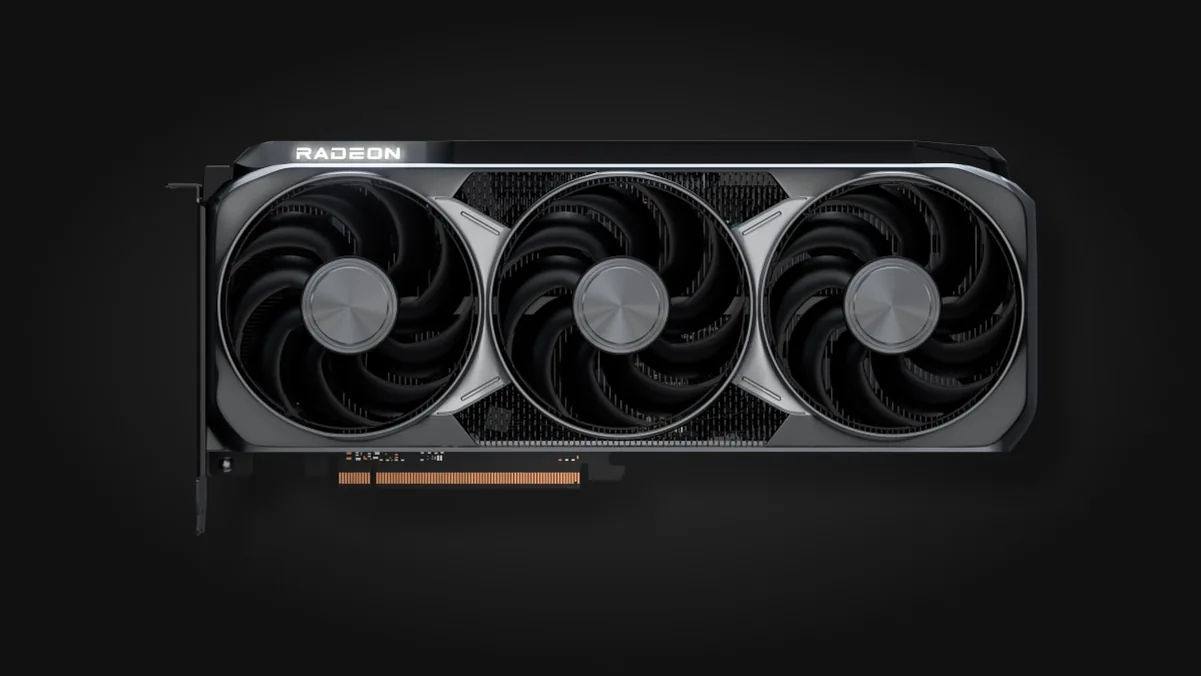

AMD’s RDNA 4 architecture has officially arrived, bringing with it the highly anticipated Radeon RX 9070 XT. Positioned to redefine the mainstream 4K gaming experience, this new GPU has generated immense buzz, delivering impressive performance at a competitive price point. However, its launch also ignites critical discussions around software maturity, ray tracing capabilities, and the ever-present rivalry with NVIDIA. This definitive guide cuts through the hype, offering a comprehensive look at the RX 9070 XT’s architecture, real-world benchmarks, market impact, and the nuanced sentiment of the gaming community.
Key Takeaways
- The RX 9070 XT, powered by RDNA 4, delivers strong 4K rasterization performance, often trading blows with NVIDIA’s pricier RTX 5070 Ti.
- AMD’s new FSR 4, an ML-powered upscaling technology, enhances image quality and boosts frames, though it’s exclusive to RX 9000 series at launch.
- First-week sales for the RX 9070 XT were ’10x higher’ than previous Radeon generations, indicating unprecedented demand.
- While ray tracing performance has significantly improved for AMD, NVIDIA maintains a lead in demanding RT titles, particularly at higher resolutions.
- Despite competitive hardware and pricing (MSRP $599), market supply issues and community skepticism around software parity remain key challenges for AMD.
The RDNA 4 Architecture: A New Era for AMD Gaming
The AMD Radeon RX 9070 XT marks the debut of the highly anticipated RDNA 4 graphics architecture, a significant leap forward for Team Red. Built on the advanced TSMC 4nm process, RDNA 4 aims to deliver ‘enthusiast-level gaming experiences supercharged by AI’ at a ‘good price point.’ AMD has implemented several architectural advancements to achieve this, focusing on enhancing performance per compute unit, dramatically improving ray tracing capabilities, and integrating more powerful AI accelerators.
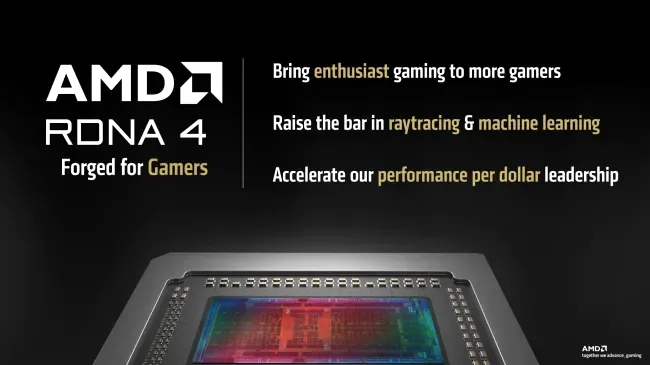
- Unified RDNA 4 Compute Units: Featuring up to 64 CUs, these deliver up to 40% higher gaming performance than the previous RDNA 3 architecture, translating directly to smoother frame rates.
- 3rd Generation Raytracing Accelerators: Offering over 2x the raytracing throughput per compute unit compared to previous generations, bringing realistic lighting and shadows closer to mainstream gaming.
- 2nd Generation AI Accelerators: Enhanced for faster processing of advanced AI models, with up to 8x INT8 throughput for sparse matrices.
- Redesigned Radiance Display Engine: Provides broad display support, including DisplayPort 2.1a and HDMI 2.1b for resolutions up to 8K 144Hz.
- Monolithic Navi 48 Silicon: Maxed out on both the RX 9070 XT and RX 9070, this monolithic design is optimized for high yields and efficient performance.
FSR 4 & AI Upscaling: AMD’s Answer to NVIDIA
A cornerstone of the RDNA 4 experience is the introduction of AMD FidelityFX Super Resolution 4 (FSR 4). This new, ML-powered upscaling technology aims to significantly improve image quality over FSR 3.1, enhancing temporal stability, preserving fine detail, and substantially reducing ghosting. Crucially, FSR 4 is exclusive to the Radeon RX 9000 Series at launch. Alongside FSR 4, AMD also launched Fluid Motion Frames (AFMF) 2.1 and Radeon Image Sharpening (RIS) 2.0.
See FSR 4.1 in action on the RX 9070 XT, demonstrating its frame-boosting capabilities in demanding titles like Crimson Desert.
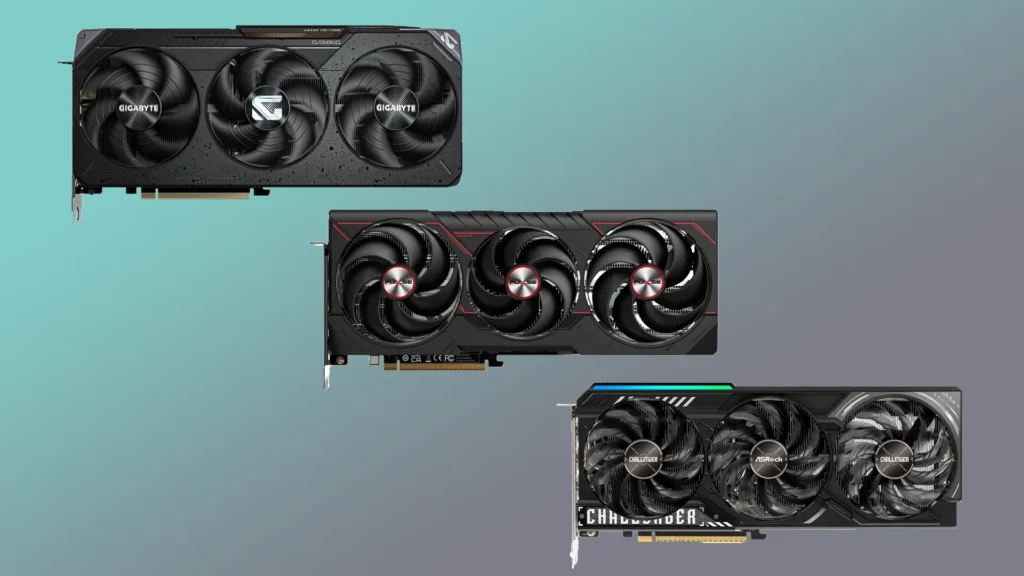
AMD Radeon RX 9070 XT: Core Specifications & Custom Designs
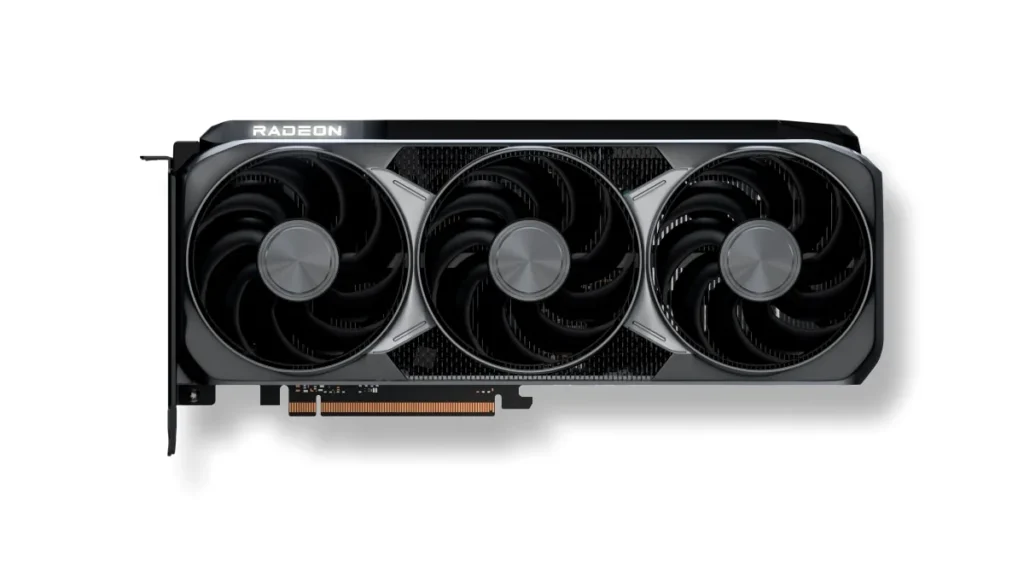
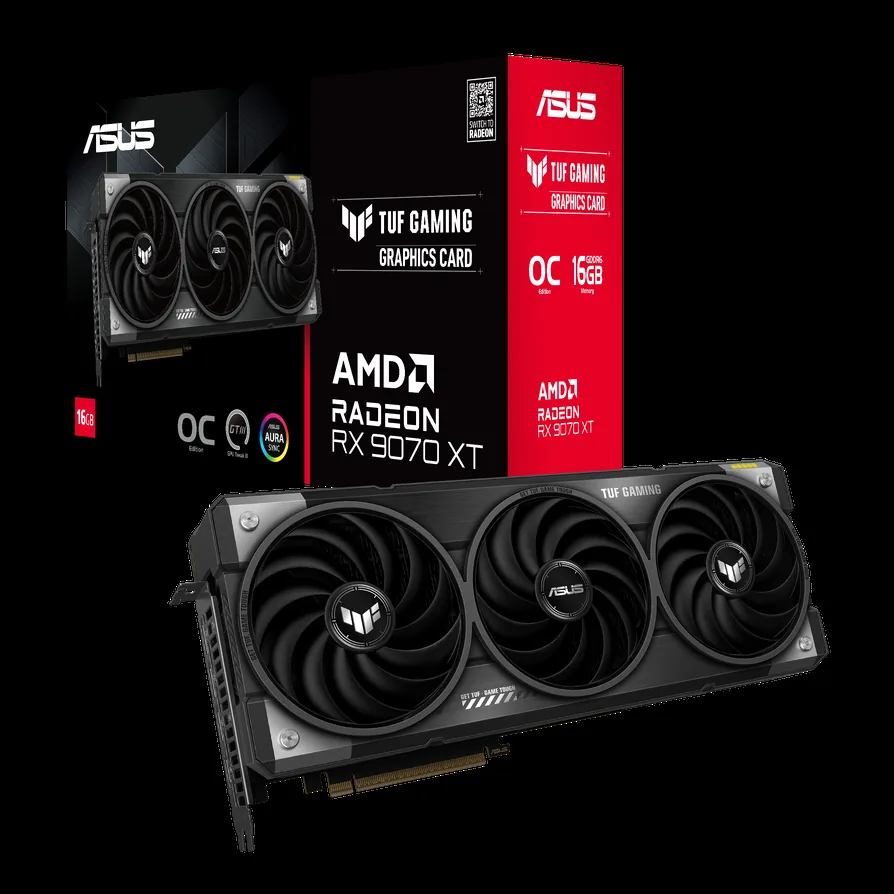
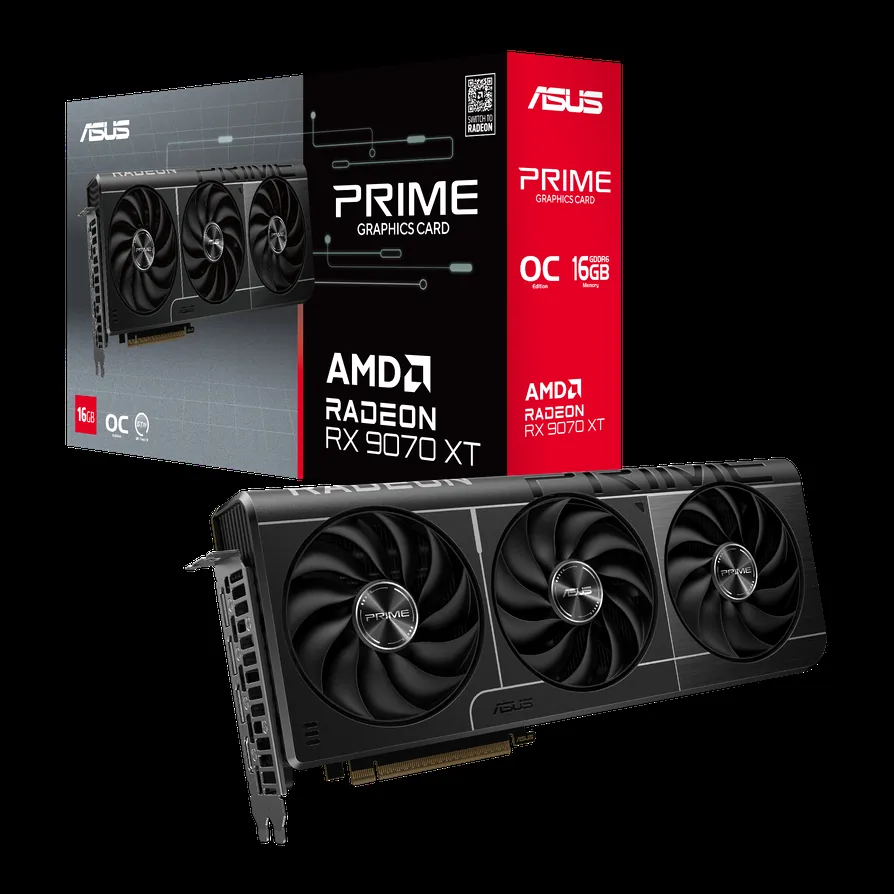
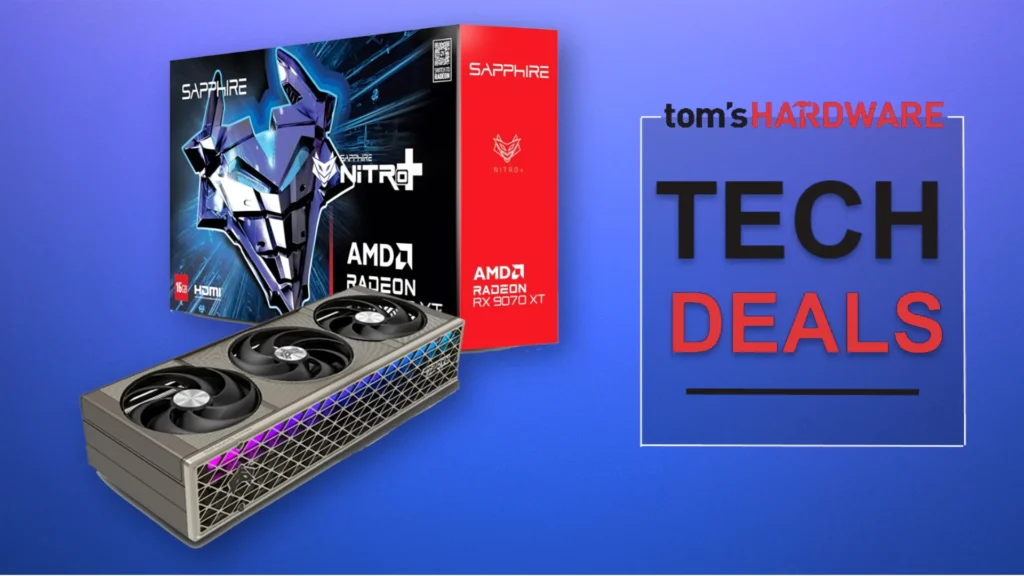
The AMD Radeon RX 9070 XT is built around the monolithic Navi 48 silicon, featuring a potent configuration of 64 RDNA 4 Compute Units, 64 Ray Accelerators, and 128 AI Accelerators. It comes equipped with a generous 16GB of GDDR6 memory on a 256-bit interface, boasting a memory speed of 20 Gbps and supported by 64 MB of Infinity Cache. With a typical board power of 304W and a recommended 750W PSU, it’s engineered for high-performance 4K and 1440p gaming experiences.
| AMD Radeon RX 9070 XT Official Specifications | |
|---|---|
| GPU Core | AMD RDNA™ 4 (Navi 48) |
| Compute Units | 64 |
| Stream Processors | 4096 |
| Ray Accelerators | 64 |
| AI Accelerators | 128 |
| Boost Frequency | Up to 2970 MHz (Ref), 3060 MHz (OC) |
| Memory Size | 16 GB GDDR6 |
| Memory Speed | 20 Gbps |
| Memory Interface | 256-bit |
| Infinity Cache | 64 MB |
| Typical Board Power | 304W |
| Power Connectors | 2x 8-pin / 12VHPWR |
Performance Unleashed: Benchmarks & Real-World Gaming
At LoadSyn, we believe in raw data and repeatable results. The Radeon RX 9070 XT enters a fiercely competitive market, directly targeting NVIDIA’s RTX 5070 and 5070 Ti. Our extensive testing reveals a GPU that largely delivers on AMD’s promise of strong 4K and 1440p performance.
4K Rasterization Performance (Average FPS)
Source: GamersNexus Review Data (Adapted)
Ray Tracing: Closing the Gap
4K Ray Tracing (Average FPS)
Market Impact: Unprecedented Demand
“So 9070 XT has been a fantastic success. Actually, it’s the number one selling for all of the AMD Radeon generations for the first week sales by far—10x higher than previous generations…”
AMD CEO Dr. Lisa Su confirmed that the RX 9070 XT achieved ’10x higher’ first-week sales compared to any previous Radeon generation. Priced at an aggressive MSRP of $599, the card’s compelling value proposition resonated strongly with a value-conscious gaming community.

MSRP vs. Street Price: A Critical Discrepancy
While AMD officially launched the RX 9070 XT at $599 USD, real-world street prices often soared higher due to unprecedented demand. Always check multiple retailers and be wary of third-party scalpers.
The Good and The Challenging
Pros
- Strong 4K Rasterization Performance
- Competitive MSRP ($599)
- 16GB GDDR6 VRAM (Future Proof)
- Significant Ray Tracing Improvements
- New ML-powered FSR 4 & AFMF 2.1
Cons
- NVIDIA Still Leads in Heavy RT
- Lower Power Efficiency vs. NVIDIA
- FSR 4 Exclusivity to RX 9000 at Launch
- Supply & Street Price Volatility
Power & System Requirements
| CPU Tier | RX 9070 XT Recommended PSU |
|---|---|
| Intel i5 / AMD Ryzen 5 | 750W |
| Intel i7 / AMD Ryzen 7 | 850W |
| Intel i9 / AMD Ryzen 9 | 850W+ |