

MacBook Displays Enter a New Era: Samsung’s Tandem OLED Powers Apple’s Next-Gen Pros
For years, the prospect of OLED technology gracing the screens of Apple’s iconic MacBooks has been a fervent wish among users and industry watchers alike. While Apple has delivered exceptional Liquid Retina XDR displays, the allure of true blacks, unparalleled contrast, and superior power efficiency offered by OLED has remained a tantalizing future. Now, intelligence from our lab and supply chain reports indicates that this long-anticipated shift is not just on the horizon, but actively being propelled by Samsung Display, which is spearheading the production of an advanced OLED solution specifically targeting the forthcoming M6 MacBook Pro and Max models. This isn’t merely an incremental upgrade; it’s a foundational leap for Apple’s professional laptop line, promising a visual revolution.
Key Takeaways
- Samsung Display is reportedly ahead of schedule in producing 8.6-generation OLED panels.
- These advanced panels are destined for Apple’s future M6 MacBook Pro and Max models.
- The core innovation is Tandem OLED, a double-stack design offering superior brightness, power efficiency, and longevity.
- This technology directly addresses long-standing desires for enhanced display quality and performance on MacBooks.
Tandem OLED: The Double-Stack Innovation Driving MacBook’s Visual Future
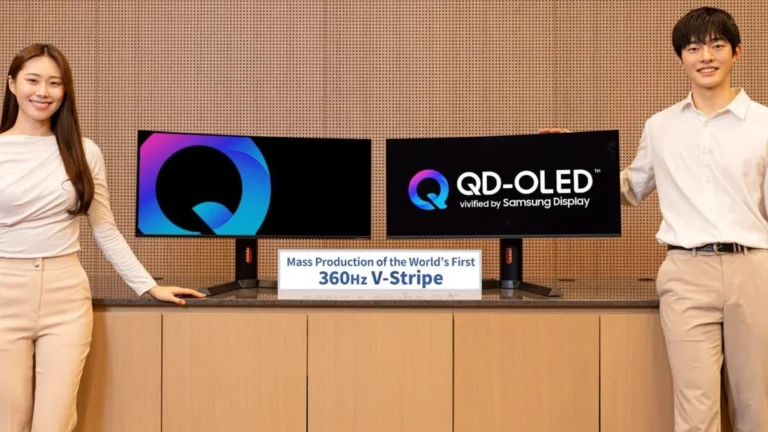
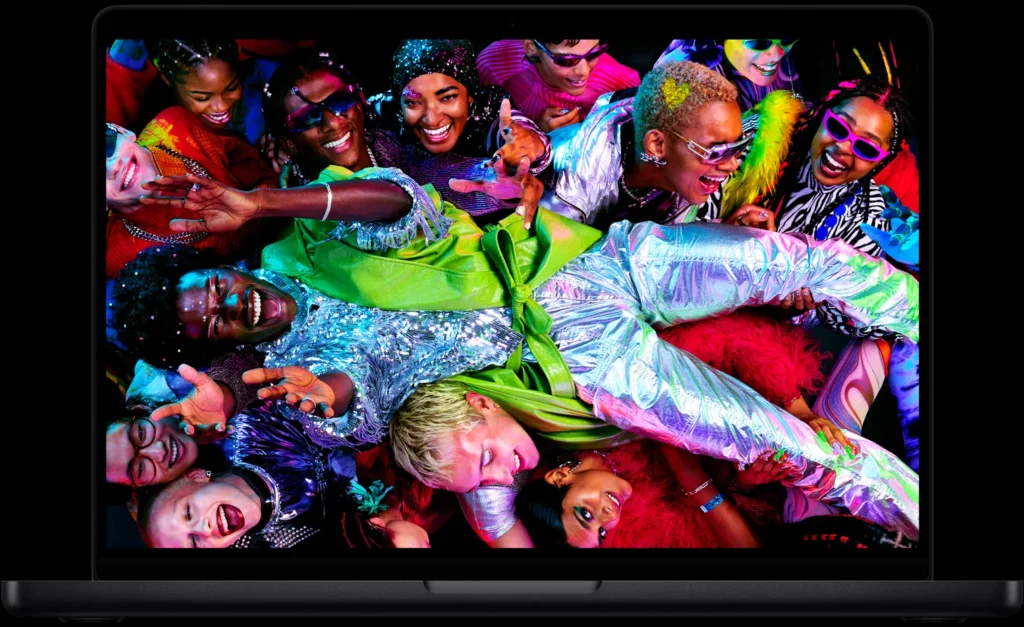
At the heart of this display revolution lies Tandem OLED technology, a significant architectural advancement over traditional single-layer OLED panels. Simply put, Tandem OLED employs a ‘double-stack’ design, featuring two light-emitting layers stacked one atop the other. This ingenious structure is crucial for larger-format displays like those found in MacBooks, directly tackling the inherent limitations of conventional OLED. By distributing the light output across two layers, Tandem OLED can achieve significantly higher sustained brightness levels, reaching up to 1000 nits in High Brightness Mode (HBM) and an astounding 1600 nits for peak HDR content. Crucially, this double-stack approach also dramatically enhances power efficiency and extends the display’s lifespan, while substantially mitigating the long-standing concern of screen burn-in. Apple has already embraced this technology, branding it ‘Ultra Retina XDR’ on its latest M4 iPad Pro models, setting a clear precedent for its integration into the MacBook lineup.
Samsung Display Accelerates 8.6-Generation OLED Production for Apple
- Samsung Display’s 8.6-generation OLED production for IT devices is reportedly ahead of schedule, signaling rapid progress.
- This new generation of panels is specifically optimized for larger displays, making them ideal for the 14-inch and 16-inch form factors of the MacBook Pro.
- Samsung is heavily investing in its IT OLED production lines, indicating a strategic focus on securing a dominant position in the high-end laptop display market.
- These panels are explicitly targeted for future Apple models, particularly the M6 MacBook Pro and M6 Max, confirming Apple’s commitment to this advanced display technology.
Overcoming Historical Skepticism: How Tandem OLED Solves Apple’s OLED Concerns
“If you ever buy anything online and really want to know what the color is, as many people do, you should really think twice before you depend on the color from an OLED display.”
Apple, under Tim Cook’s leadership, has historically expressed reservations about OLED technology, particularly concerning color accuracy and longevity. Tim Cook famously called the color saturation of early OLED displays ‘awful,’ emphasizing Apple’s pursuit of a ‘superior experience’ over mere specifications. These past criticisms, while perhaps valid for older OLED generations, are precisely what Tandem OLED technology addresses head-on. The double-stack design inherently mitigates issues like brightness limitations and the risk of burn-in, which were likely the primary concerns behind Cook’s earlier comments. By delivering enhanced brightness, improved color stability, and significantly extended lifespan, Tandem OLED enables Apple to adopt this superior display technology without compromising its rigorous quality standards or its commitment to a pristine user experience. This marks a strategic pivot, driven by technological advancement, allowing Apple to finally embrace OLED for its flagship laptops.
The Definitive Advantages: How Tandem OLED Transforms MacBooks
Tandem OLED Advantages for MacBooks
- Significantly higher peak and sustained brightness (up to 1000 nits HBM, 1600 nits HDR).
- Dramatically improved power efficiency, leading to longer battery life.
- Enhanced longevity, potentially lasting over a decade.
- Greatly reduced risk of screen burn-in and image persistence.
- Superior contrast ratios and true blacks due to self-emissive pixels.
- Thinner display assembly, allowing for sleeker designs.
Potential Drawbacks
- Higher manufacturing cost, potentially increasing MacBook Pro prices.
- Initial supply chain ramp-up challenges for mass production.
- Potential for slight color shifts compared to perfectly calibrated LCDs (though Tandem mitigates this).
Transforming the User Experience: Gaming, Creativity, and Beyond
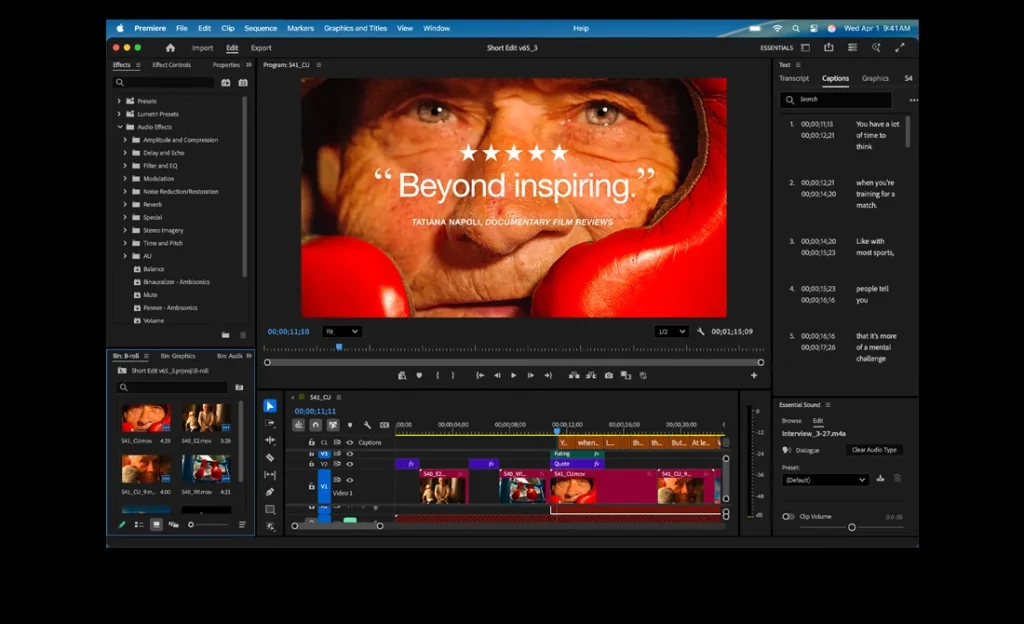
The integration of Tandem OLED into future M6 MacBook Pro and Max models promises a transformative user experience across the board. For gamers, the impact will be profound: imagine titles like Cyberpunk 2077, already optimized for Apple Silicon with hardware-accelerated ray tracing, rendered with unparalleled contrast, true inky blacks, and vibrant, lifelike colors. The superior motion smoothness offered by OLED, especially when combined with Apple’s ProMotion adaptive refresh rate technology (up to 120Hz), will make fast-paced action incredibly fluid and immersive. Beyond gaming, creative professionals in video editing, graphic design, and 3D rendering will benefit immensely. The increased brightness and color accuracy will ensure that what they see on screen is as close to reality as possible, enhancing precision in critical workflows. Furthermore, the enhanced durability and efficiency of Tandem OLED could pave the way for exciting new features, including the long-rumored touchscreen integration for MacBooks, offering a more interactive and versatile computing experience.


The Fandom Pulse: Answering Years of User Demand
Our Fandom Pulse reports consistently show a clear trend: while many users remain highly content with the raw performance and longevity of their M1 MacBooks, there’s a palpable desire for significant display advancements. Comments like, “I’ll be running my legendary M1 Air until that screen gets an upgrade- OLED or 120hz please,” perfectly capture this sentiment. Users are weighing practical upgrade decisions, often finding their existing Macs perfectly sufficient for current needs, yet aspiring to better display technology. The arrival of Tandem OLED, coupled with the existing ProMotion adaptive refresh rate, directly responds to this long-standing community aspiration. This combination of groundbreaking contrast, brightness, and fluid motion could be the ‘significant screen improvement’ needed to catalyze the next major upgrade cycle for a generation of satisfied but visually hungry MacBook users.
Expert Outlook: When to Expect the M6 OLED MacBooks
While Apple maintains its characteristic secrecy, the accelerated production timelines from Samsung Display suggest a clearer picture for the debut of these revolutionary MacBooks. Industry analysts, including prominent voices like Mark Gurman and Ming-Chi Kuo, have long pointed towards Apple’s eventual adoption of OLED for its professional laptops. With 8.6-generation Tandem OLED production now ahead of schedule, the window for the M6 MacBook Pro and Max models to feature these displays could open sooner than initially anticipated. Consensus among analysts indicates a potential launch in late 2025 or throughout 2026. This timeline aligns with Apple’s typical product cycles and allows for a robust ramp-up of the advanced display technology, ensuring a smooth market transition and solidifying Apple’s position at the forefront of laptop display innovation.
The Dawn of a New MacBook Era
The impending arrival of Samsung’s 8.6-generation Tandem OLED technology in Apple’s M6 MacBook Pro and Max models represents more than just a specification bump; it’s a fundamental paradigm shift in display quality. This isn’t an incremental upgrade but a transformative leap that will redefine how users interact with their MacBooks, from vibrant gaming worlds to pixel-perfect creative workflows. Combining unparalleled brightness, true blacks, superior power efficiency, and enhanced longevity, Tandem OLED will deliver an immersive and responsive visual experience previously unseen on a MacBook. This display revolution is poised to be the most significant visual advancement for Apple’s professional laptops since the introduction of the Retina display, marking the dawn of a truly new era for MacBook users.
Frequently Asked Questions
What is 8.6-generation OLED?
The 8.6-generation refers to the size of the glass substrates used in manufacturing, indicating larger, more efficient production for mid-sized displays like those in laptops. This generation is optimized for cost-effective mass production of laptop-sized OLED panels.
What is Tandem OLED and how is it different from regular OLED?
Tandem OLED, also known as a double-stack OLED, uses two light-emitting layers stacked on top of each other. This design significantly boosts brightness (up to 1000 nits sustained, 1600 nits peak HDR), improves power efficiency, and dramatically extends the lifespan while greatly reducing the risk of screen burn-in compared to single-layer OLEDs.
When can we expect Tandem OLED MacBooks?
Current intelligence suggests Samsung Display is ahead of schedule with production, targeting future M6 MacBook Pro and Max models. While Apple has not officially confirmed, industry analysts predict these could arrive in the next generation of MacBook Pro models, potentially in late 2025 or 2026.
Will these MacBooks feature touchscreens?
Industry analysts like Mark Gurman and Ming-Chi Kuo have predicted that Apple is exploring touchscreen integration for OLED MacBooks. The durability and brightness of Tandem OLED would make this a more viable option, aligning with Apple’s push for more interactive computing.
How will Tandem OLED benefit gaming on MacBooks?
For gaming, Tandem OLED will provide unparalleled contrast, true blacks, vibrant colors, and potentially higher sustained brightness, leading to a much more immersive visual experience. Combined with ProMotion’s 120Hz refresh rate, this will make fast-paced games incredibly fluid and visually stunning.