
Introduction: The DLSS 4.5 Promise for Your Older RTX GPU
NVIDIA’s Deep Learning Super Sampling (DLSS) has consistently pushed the boundaries of gaming visuals and performance, evolving from a novel concept to an indispensable tool for many PC gamers. With the advent of DLSS 4.5, NVIDIA heralds a new era of image quality, praised by early testers for its exceptional clarity and temporal stability, often surpassing native resolution in blind comparisons. Yet, as with any significant technological leap, a critical question looms for the vast majority of the gaming community: how does this latest iteration truly fare on the widely adopted RTX 20 and 30 series GPUs? This isn’t just a technical query; it’s a deeply felt concern within a community already grappling with the promises and pitfalls of AI upscaling and frame generation, where terms like ‘AI slop’ and ‘uncanny valley’ are increasingly part of the discourse. LoadSyn is here to cut through the marketing, offering a definitive analysis of DLSS 4.5’s real-world impact on your older RTX rig.
Deconstructed: What is DLSS 4.5 and the Second-Gen Transformer Model?
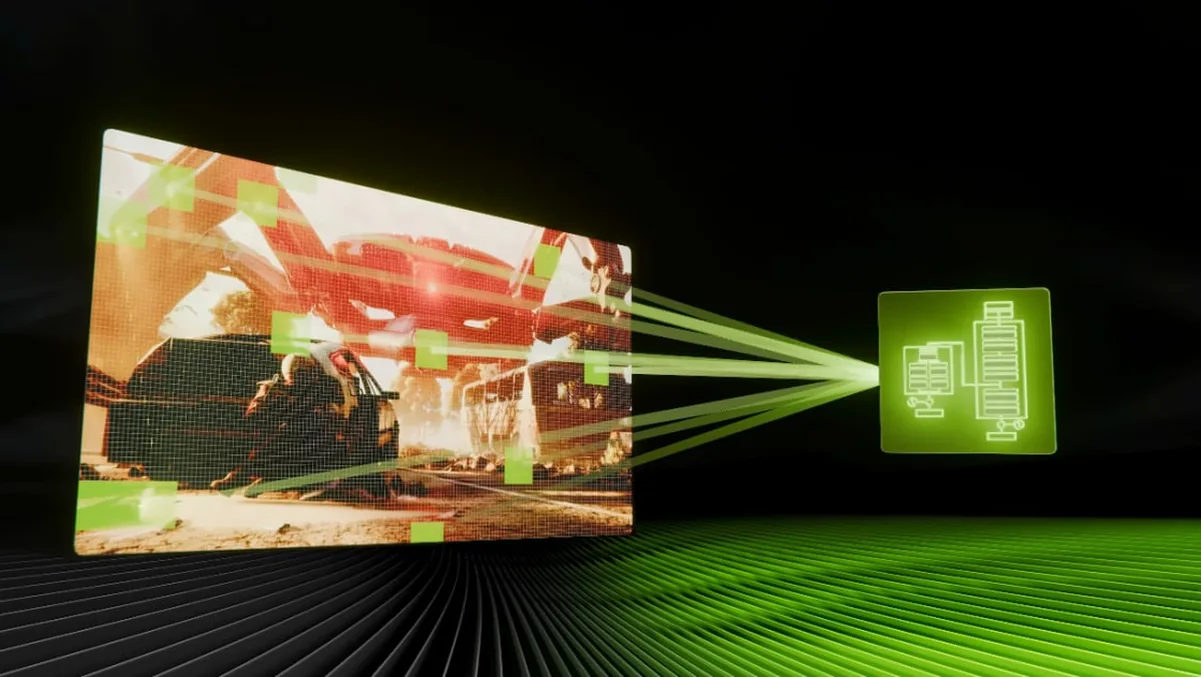
At its core, DLSS 4.5 represents a significant architectural overhaul, building upon years of NVIDIA’s neural rendering research. The headline feature is its second-generation Transformer AI model for Super Resolution. Unlike previous iterations that relied on Convolutional Neural Networks, this updated model is trained on a significantly expanded, high-fidelity dataset—requiring five times the computational investment of its predecessor. This deeper training allows the AI to develop a more profound understanding of every scene, intelligently leveraging game engine pixel sampling and motion data. Furthermore, DLSS 4.5 shifts to FP8 precision data, enabling doubled inference throughput via Tensor Cores on the latest RTX 40 and 50 series GPUs. The collective impact of these advancements is designed to deliver superior image quality, particularly in areas like complex lighting, intricate finer edges, and overall motion clarity, while drastically reducing common artifacts such as ghosting and shimmering that have long plagued temporal upscaling solutions. It’s an evolution aimed at producing images that are not just higher resolution, but fundamentally more stable and visually accurate.
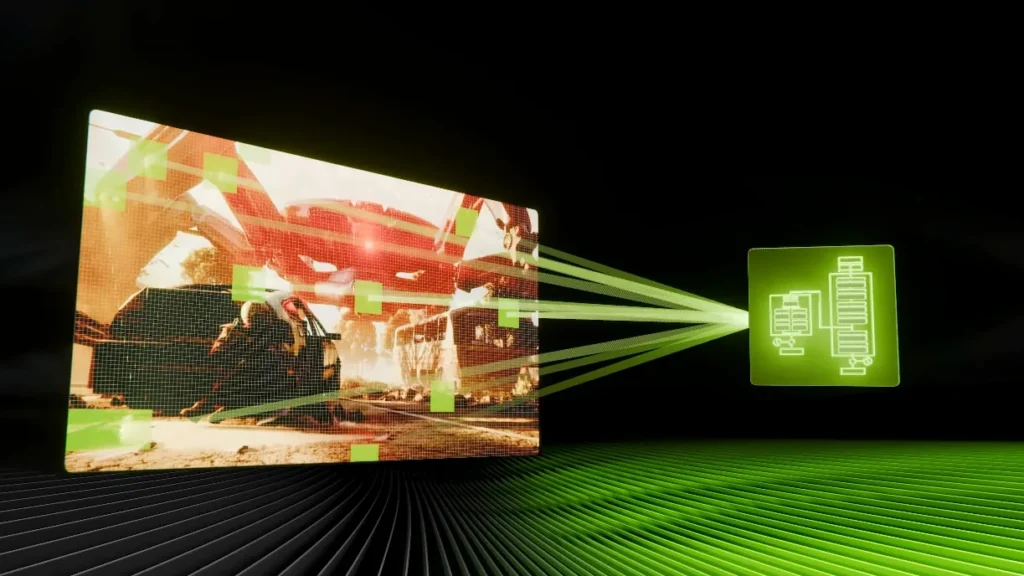
- Superior Detail: Better lighting, sharper edges, and more accurate texture details.
- Reduced Ghosting: Significant reduction in visual artifacts during fast motion.
- Second-Gen Transformer AI Model: Trained on an expanded, high-fidelity dataset for deeper scene understanding.
- FP8 Acceleration: Utilizes FP8 precision data via Tensor Cores (on RTX 40/50 series) for doubled inference throughput.
The RTX 20 & 30 Series Conundrum: Performance Hits & Hidden Costs
While the new DLSS 4.5 Super Resolution’s second-generation Transformer model is indeed available across all RTX GPUs—from the 20 series to the latest 50 series—its underlying reliance on FP8 acceleration introduces a significant technical hurdle for older hardware. RTX 20 and 30 series cards, lacking native FP8 support, must ‘dequantize’ this data to FP16, a process that demands substantially more computational cycles. This isn’t a minor inconvenience; it translates directly into a heavier performance impact. Our testing and community reports indicate a noticeable FPS drop, for instance, an 8-12 FPS reduction on an RTX 3080 in a demanding title like Cyberpunk 2077 when compared to DLSS 4. Beyond raw frame rates, there’s a significant increase in VRAM and power draw. RTX 20/30 series users can expect around 97% more VRAM usage at 1440p and over 103% more at 4K when running DLSS 4.5 compared to DLSS 4, alongside a discernible bump in power consumption. This means that while older cards gain the visual benefits, they pay a tangible cost that newer architectures simply don’t, creating a clear generational divide in the DLSS 4.5 experience.
| Metric | RTX 20/30 Series (DLSS 4.5 vs 4) | RTX 40/50 Series (DLSS 4.5 vs 4) |
|---|---|---|
| FP8 Support | No (requires dequantization) | Yes (Native) |
| Computational Demand | Approx. 5x higher | Minimal impact |
| VRAM Increase (1440p) | ~97% more | ~47% more |
| VRAM Increase (4K) | ~103% more | ~53% more |
| FPS Drop (Cyberpunk) | 8-12 FPS lower | Minimal (4-5%) |
| Power Draw Increase | Noticeable | ~5% increase |
Simulated: DLSS 4.5 Performance Impact on RTX 3080 (Cyberpunk 2077)
Average FPS
Beyond Benchmarks: Visual Fidelity & The ‘Blind Test’ Advantage
While performance metrics paint a clear picture of the computational cost, the subjective experience of visual fidelity with DLSS 4.5 is overwhelmingly positive. A landmark blind test conducted by ComputerBase revealed that gamers consistently preferred DLSS 4.5 over both native resolution rendering (with TAA) and AMD’s FSR 4 across a range of titles including *Cyberpunk 2077*, *Horizon Forbidden West*, and *The Last of Us Part II*. Participants lauded its superior detail, anti-aliasing, and exceptional temporal stability, noting a significant reduction in artifacts like shimmering and ghosting. HotHardware echoed this sentiment, praising the new model for its “radically improved visual quality.” However, this objective triumph doesn’t entirely silence the subjective unease in some corners of the community. Concerns about “AI slop” or an “uncanny valley” effect persist, particularly in the shadow of the recent DLSS 5 controversy where its neural rendering caused noticeable distortions to character faces, sparking a heated debate about AI altering artistic intent. While DLSS 4.5 focuses on enhancing clarity, the philosophical friction around AI-generated content remains a potent undercurrent in the gaming world.
“This new model offers radically improved visual quality” – HotHardware
The Future is Frame-Generated: 6x MFG & Dynamic DLSS 4.5
Beyond the impressive Super Resolution enhancements, DLSS 4.5 introduces groundbreaking advancements in frame generation, though with a distinct hardware caveat. The new 6x Multi Frame Generation (MFG) pushes the boundaries of performance, capable of generating an astonishing five intermediate frames for every single frame traditionally rendered by the GPU. Complementing this is Dynamic Multi Frame Generation, an intelligent algorithm that continuously monitors the gap between your GPU’s raw performance and your monitor’s refresh rate, dynamically adjusting the frame generation multiplier to maintain optimal smoothness and frame pacing. These features are designed to usher in an era of 4K path-traced gaming at 240Hz+ on the most demanding titles. Crucially, however, these advanced frame generation capabilities—the 6x MFG and Dynamic MFG—are exclusive to NVIDIA’s latest RTX 50 series GPUs. This strategic hardware lock reinforces a growing generational divide, ensuring that only those with the newest, cutting-edge hardware can fully harness DLSS 4.5’s most extreme performance multipliers.
Pros
- Massive FPS Boost: Up to 6x frame generation on RTX 50 series.
- Smoother Gameplay: Dynamic MFG ensures stable frame pacing.
- Future-Proofing: Enables 4K path-traced gaming at 240Hz+.
Cons
- Increased Input Latency: FG inherently adds latency.
- Potential Visual Artifacts: Generated frames can still ‘hallucinate’.
- Hardware Exclusivity: Limited to RTX 50 series GPUs.
- Optimization Concerns: Masking poor native game optimization.
The Fandom Reacts: ‘AI Slop’ and Optimization Concerns
The PC gaming community, ever discerning and vocal, has met NVIDIA’s aggressive push into advanced frame generation with a potent mix of frustration, skepticism, and even a degree of resignation. There’s a prevailing narrative that these technologies, particularly the extreme multipliers, are less about genuine performance innovation and more about masking fundamentally poorly optimized games. Many gamers view the artificial generation of frames as a ‘slop’ solution, a compromise that introduces unwelcome visual artifacts, such as ghosting and ‘hallucinations,’ and, crucially, increased input latency. This fundamentally alters the gaming experience, transforming what should be raw, responsive gameplay into something perceived as less authentic. The sentiment is clear: for a significant portion of the fandom, high frame counts achieved through generation don’t compensate for a perceived degradation in the core gameplay feel, leading to comments like, “We are genuinely evolving backwards” and “Game studio be like ‘Game not optimized? Do you guys not have frame gen?'” The debate transcends technicalities, touching on the very philosophy of what constitutes a ‘good’ gaming experience.
“Calling normal rendering ‘Brute Forcing’ is the most Nvidia propaganda ever lmao”
Optimizing DLSS 4.5 on Your Older RTX Rig: A Practical Guide
For owners of RTX 20 and 30 series GPUs, DLSS 4.5 presents a unique set of challenges that demand a more nuanced and hands-on approach. While the visual enhancements are undeniably impressive, the performance and resource overhead cannot be ignored. Blindly enabling the latest presets might lead to unexpected frame rate drops or increased system strain. Therefore, it’s essential to approach DLSS 4.5 with a strategic mindset, experimenting with settings and diligently monitoring your in-game experience to find the optimal balance for your specific hardware and preferences.
- Utilize the NVIDIA App DLSS Override: Access the ‘DLSS Override – Model Preset’ in the NVIDIA App’s Graphics tab. For most RTX 20/30 series users, avoiding ‘Recommended’ (which defaults to M/L) is crucial.
- Consider ‘Preset K’ (DLSS 4): NVIDIA itself recommends ‘Preset K’ (the DLSS 4 transformer model) for RTX 20/30 series to balance performance and image quality, given the FP8 performance hit of Presets M/L.
- Experiment with Presets M & L Cautiously: While Presets M (Performance) and L (Ultra Performance) offer superior image quality, they will incur a heavier performance cost on older cards.
- Adjust Base Resolution: If performance is still an issue, consider lowering your base rendering resolution (e.g., from 1440p to 1080p) to give DLSS more headroom.
- Monitor VRAM & Power Draw: Be mindful of increased VRAM and power consumption, especially if you’re close to your GPU’s limits.
- Trust Your Eyes: Ultimately, the ‘best’ setting is subjective. Spend time with different presets to see what balance works for you.
Frequently Asked Questions
Is DLSS 4.5 available for all RTX GPUs?
Yes, the 2nd Gen Transformer model for DLSS 4.5 Super Resolution is available for RTX 20, 30, 40, and 50 series GPUs via the NVIDIA App. However, the advanced 6x Multi Frame Generation and Dynamic Multi Frame Generation features are exclusive to RTX 50 series cards.
Why does DLSS 4.5 impact RTX 20/30 series performance more?
RTX 20 and 30 series GPUs lack native FP8 precision support. DLSS 4.5’s 2nd Gen Transformer model is ‘FP8 Accelerated,’ meaning older cards must ‘dequantize’ data to FP16, requiring more computational cycles and leading to a heavier performance hit in FPS, VRAM, and power draw.
What is the ‘best’ DLSS 4.5 preset for my RTX 3080?
For RTX 20/30 series, NVIDIA often recommends ‘Preset K’ (the DLSS 4 model) for a better balance of performance and image quality. If you prioritize visual fidelity, ‘Preset M’ (DLSS 4.5 Performance) offers superior image quality but with a higher performance cost.