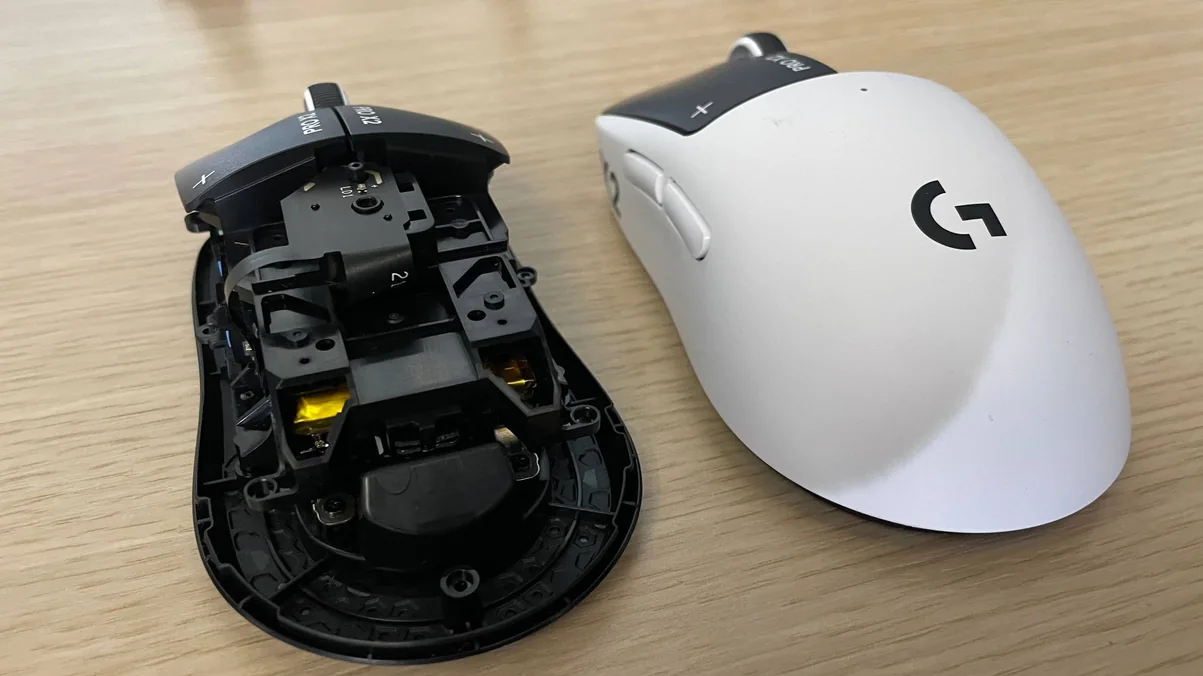

Logitech G Pro X2 Superstrike: Ushering in a New Era of Competitive Mouse Technology
The landscape of gaming peripherals is constantly evolving, yet true innovation often feels incremental. The Logitech G Pro X2 Superstrike, however, is poised to shatter that perception. While its exterior design might echo the familiar, battle-tested lines of its predecessors, what lies beneath the surface represents a fundamental re-engineering of the gaming mouse. At its core is the revolutionary Haptic Inductive Trigger System (HITS), a proprietary technology designed to replace traditional mechanical clicks with an unprecedented blend of speed and customization. This isn’t merely an update; it’s a paradigm shift, promising to redefine input latency and competitive advantage. Join the LoadSyn Technical Lab as we dissect the Superstrike, exploring the intricate engineering and real-world implications of a device that could very well set the new standard for competitive gaming mice.
Key Insights
- Radically Reduced Latency: The Haptic Inductive Trigger System (HITS) can reduce click latency by up to 30 milliseconds, offering a tangible competitive edge in fast-paced games.
- Unprecedented Customization: Players gain granular control over actuation points (10 levels), rapid trigger sensitivity (5 levels), and haptic feedback intensity (6 levels), allowing for a truly personalized clicking experience.
- New Competitive Standard: Despite its premium price point ($179.99 USD) and initial user adaptation to the haptic ‘click’ feel, the Superstrike’s innovation is set to become a benchmark, influencing the future design of high-performance gaming mice.
Engineering a Revolution: The Haptic Inductive Trigger System (HITS) Explained
At the heart of the Logitech G Pro X2 Superstrike’s transformative performance lies the Haptic Inductive Trigger System (HITS). This proprietary technology fundamentally departs from conventional mouse switches by replacing physical microswitches with electromagnetic induction. Instead of relying on physical contact to complete a circuit, HITS utilizes a coil-based sensor that measures the movement of a thin metal plate. As the button is pressed, this metal plate disturbs the electromagnetic field generated by the coil, allowing the system to detect the user’s intent to click significantly earlier in the button’s travel distance. This early detection is a critical differentiator, offering a profound advantage over traditional mechanical or even optical switches, which inherently require a physical contact or a light beam interruption to register an input.
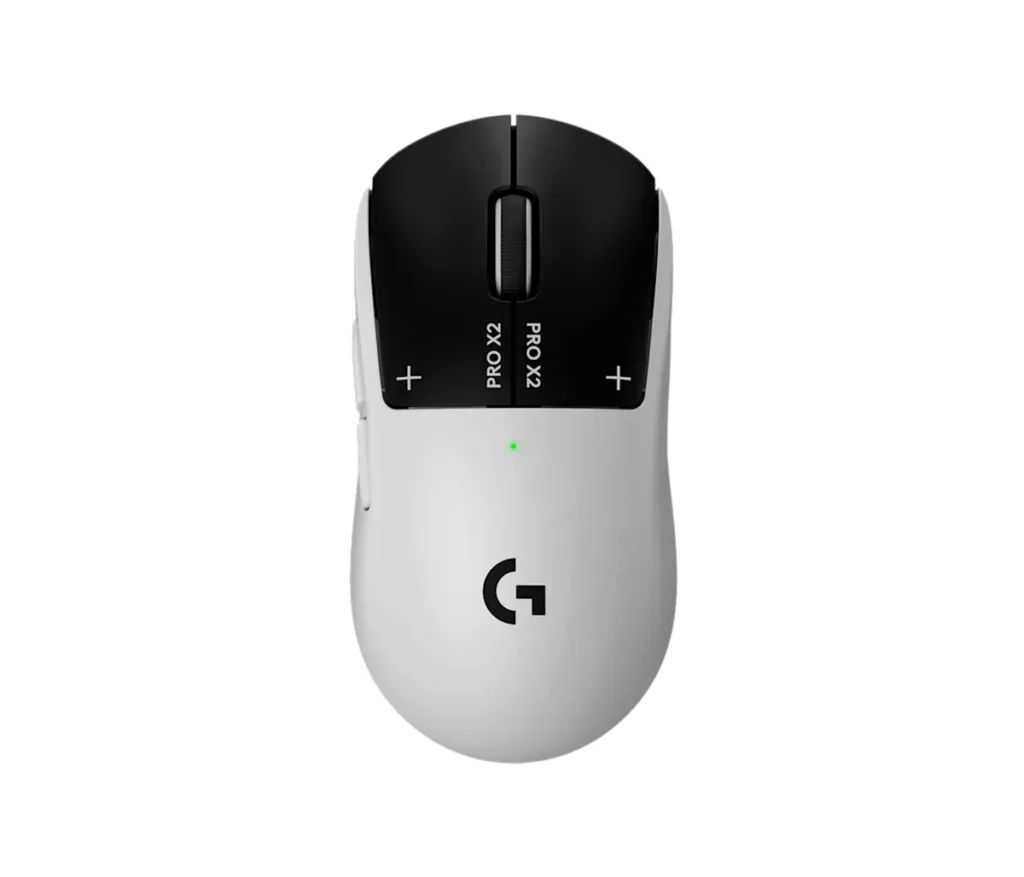
A closer look at the Logitech G Pro X2 Superstrike’s PCB, revealing the inductive coils and internal architecture that power its revolutionary click system. (Image Credit: LoadSyn Engineering Division)
The ‘Haptic’ component is the second, equally crucial half of the HITS equation. Since the inductive system registers a click without the tactile feedback of a physical ‘bottom-out,’ a tiny linear resonant actuator (LRA) is integrated beneath each primary button. This LRA is responsible for generating a simulated tactile sensation, providing a convincing ‘click’ that confirms the input. This haptic feedback functions similarly to the Force Touch trackpads found on modern MacBooks or the advanced haptics in Sony’s DualSense controllers, offering a rich, customizable tactile response. Crucially, this haptic ‘click’ is a confirmation, not the primary trigger; the actual input is registered milliseconds before the haptic response is felt. Its intensity is fully customizable, allowing users to fine-tune the feel to their exact preference, from a subtle nudge to a pronounced ‘thwomp’.
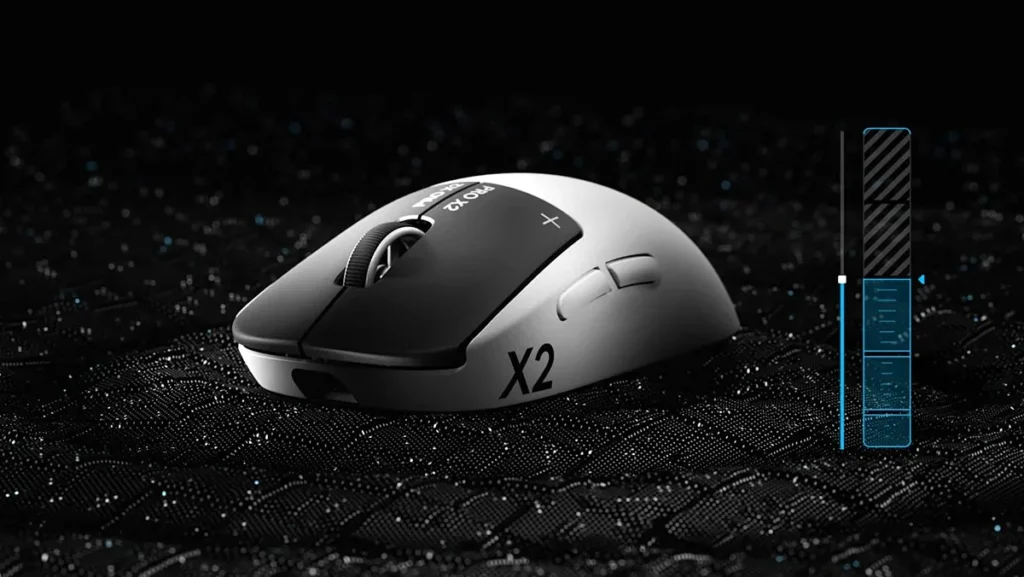
The compact haptic feedback module (LRA) within the Superstrike, designed to simulate the satisfying click of traditional switches. (Image Credit: LoadSyn Engineering Division)
HITS vs. Traditional Mouse Switch Technologies
| Feature | HITS (Logitech) | Optical (e.g., Razer) | Mechanical (Traditional) |
|---|---|---|---|
| Mechanism | Electromagnetic induction + Haptic | Infrared light beam interruption | Physical metal contact |
| Actuation Point | Fully customizable (10 levels) | Fixed | Fixed |
| Rapid Trigger | Yes (5 sensitivity levels) | No | No |
| Tactile Feedback | Simulated by LRA motor | Physical click | Physical click |
| Latency Advantage | Up to 30ms faster | Minimal delay | Small debounce delay |
Unleashing the Edge: Superstrike Performance and Competitive Advantage
Logitech’s boldest claim for the G Pro X2 Superstrike is its ability to deliver up to a 30-millisecond reduction in click latency. This isn’t a minor tweak; it’s a substantial advantage in the high-stakes world of competitive gaming, where milliseconds often dictate victory or defeat. In fast-paced titles like Counter-Strike 2, Valorant, or Apex Legends, this latency reduction translates directly into faster actuations, allowing players to register shots before their opponents. Independent testing has largely corroborated these claims. For instance, in aim trainers like AimLabs, users have reported average reaction times dropping from 247ms to 218ms when utilizing the Superstrike’s highest actuation settings.
Logitech G Pro X2 Superstrike Key Specifications
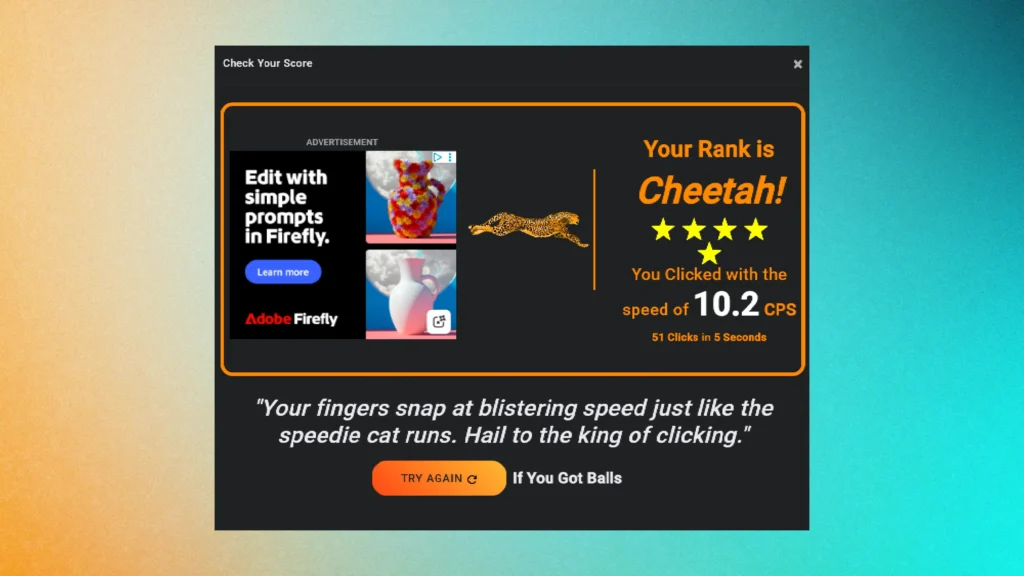
Click Speed Comparison (CPS – 5s Test)
Clicks Per Second (CPS)
- Adjustable Actuation Points (10 levels): Users can precisely customize the depth at which a click registers, from hair-trigger sensitivity for rapid-fire actions to deeper presses for deliberate, controlled inputs.
- Rapid Trigger Support (5 sensitivity levels): This innovative feature allows for instant key resets, enabling faster repeated clicks by registering a button’s reset as soon as pressure is slightly lifted.
- Adjustable Haptic Intensity (6 levels): Personalize the tactile feedback of each click, ensuring a satisfying and confidence-inspiring response tailored to individual preference.
- High Polling Rate (up to 8,000Hz wireless): Combined with the advanced HERO 2 sensor, this ultra-high polling rate minimizes tracking latency.
Familiar Form, Future Tech: Design and Ergonomics
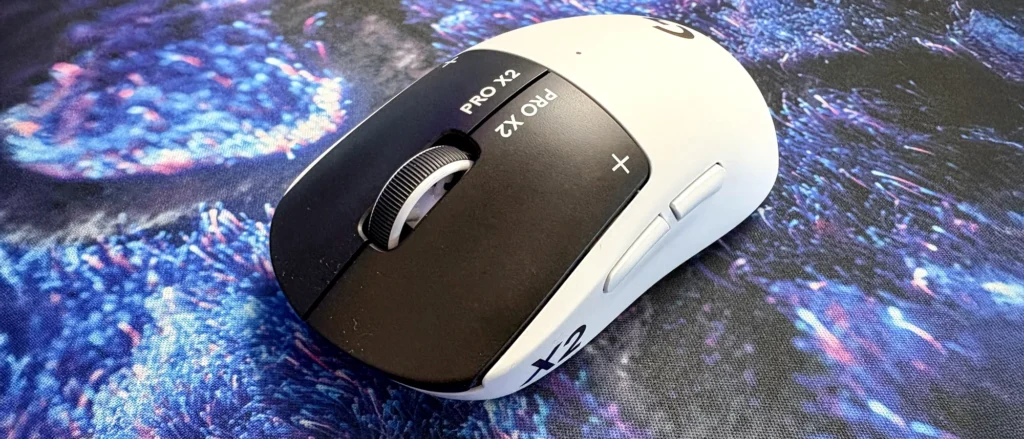
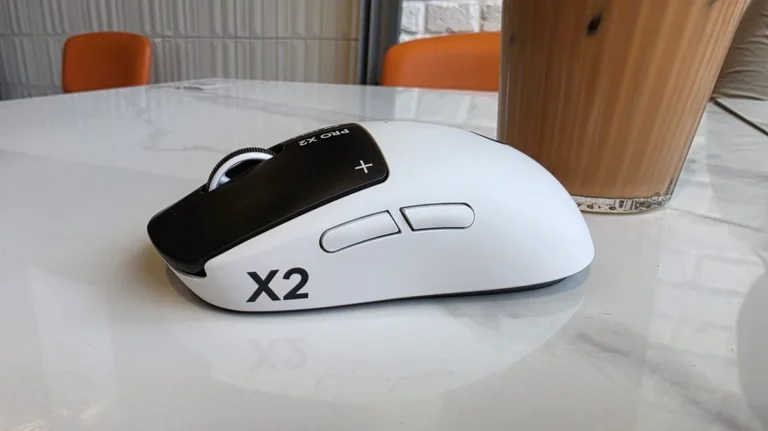
The familiar, minimalist design of the Logitech G Pro X2 Superstrike, retaining the beloved ambidextrous shape of its predecessors. (Image Credit: LoadSyn Technical Lab)
Despite its revolutionary internal technology, the Logitech G Pro X2 Superstrike retains a design that will be instantly familiar to fans of the acclaimed G Pro X Superlight series. Logitech has deliberately maintained this ‘pro-validated’ ambidextrous shape. Weighing in at an impressively light 61 grams, it’s only a single gram heavier than its predecessor, a testament to Logitech’s engineering prowess. The aesthetic remains minimalist, eschewing RGB lighting for a clean, performance-focused look.
Pros
- Revolutionary HITS technology offers significantly faster clicks.
- Extremely lightweight (61g) with pro-validated design.
- Top-tier HERO 2 sensor with 44,000 DPI.
- Excellent 90-hour battery life.
Cons
- Premium price point ($179.99 USD).
- Haptic ‘click’ requires a brief adaptation period.
- Lack of an onboard DPI switching button.
- G Hub software can be occasionally clunky.
Fandom Pulse: Community Reactions
The introduction of the Logitech G Pro X2 Superstrike has sparked a vibrant and often polarized discussion. There’s a palpable curiosity surrounding the HITS technology, particularly its promise to eliminate long-standing issues like double-clicking. However, this enthusiasm is tempered by a healthy dose of skepticism regarding the long-term durability of a novel inductive sensor and haptic motor system.
“You’re just gonna miss the shot even faster” sums up my online competitive gaming experience.
— Gaming Community Comment
This candid and humorous comment perfectly encapsulates a common sentiment within the gaming community. It reflects a self-aware cynicism that acknowledges the potential for faster inputs while noting that raw skill remains paramount.
Community’s Top Demand
While impressed by HITS, a significant portion of the community is vocal about wanting this groundbreaking technology integrated into their existing, beloved form factors, with the ‘Logitech G502 Lightspeed’ being a frequently requested candidate.
Precision Tuning: Software and Customization
The Logitech G Hub software provides granular control over HITS settings. (Image Credit: LoadSyn Input & Peripheral Lab)
All of the Logitech G Pro X2 Superstrike’s advanced customization capabilities are managed through the comprehensive Logitech G Hub software. Players can adjust the actuation point across 10 distinct levels and configure Rapid Trigger functionality independently for both the left and right mouse buttons.
- Actuation Point Adjustment: Fine-tune the click depth for precise sensitivity.
- Rapid Trigger Sensitivity: Configure instant key resets for ultra-fast repeated clicks.
- Haptic Feedback Intensity: Personalize the tactile response across 6 levels.
- Profile Management: Save multiple game-specific profiles directly to the onboard memory.
A True Paradigm Shift: LoadSyn’s Take
The Logitech G Pro X2 Superstrike undeniably marks a pivotal moment in gaming peripheral technology. Its Haptic Inductive Trigger System (HITS) delivers a measurable, customizable advantage in click latency that transcends incremental updates. While its premium price point and the initial adjustment to the ‘fake click’ might deter some, for the discerning competitive gamer seeking every possible edge, the Superstrike is an unparalleled tool.
Recommendation: Essential for competitive players and tech enthusiasts.
The New Competitive Standard?
The Haptic Inductive Trigger System (HITS) in the Logitech G Pro X2 Superstrike is more than just a feature; it’s a foundational shift. If adopted broadly, this technology could establish a new benchmark for competitive gaming mice.