
CES 2026 is upon us, and with it, the usual whirlwind of groundbreaking technology. While the buzz around new gaming monitors is palpable, the enduring promise of OLED technology continues to captivate. Its unparalleled contrast, instantaneous response times, and vibrant colors make it a dream for immersive gaming. Yet, for many PC users, there’s always been an elephant in the room – the persistent issue of text clarity. This particular Achilles’ heel has long prevented a full embrace of OLED for mixed-use scenarios, particularly for those who demand crisp, legible text for productivity alongside their gaming sessions. This year, however, signals a serious shift.
The Text Clarity Crusade: OLED’s Defining Moment at CES 2026
The root of OLED’s text clarity woes has historically stemmed from its subpixel layouts. Take Samsung’s previous triangular Pentile arrangement, for instance; while excellent for vibrant imagery, it often led to noticeable color fringing around text, making prolonged reading or coding a less-than-ideal experience. This year, the narrative changes dramatically. Both LG Display and Samsung Display are unveiling new subpixel structures at CES 2026, each meticulously engineered to improve text sharpness and clarity. This concerted effort promises to make OLED not just a gaming powerhouse, but a truly viable option for demanding mixed-use PC environments.
LG’s Tandem WOLED: Brighter, Sharper, Bigger
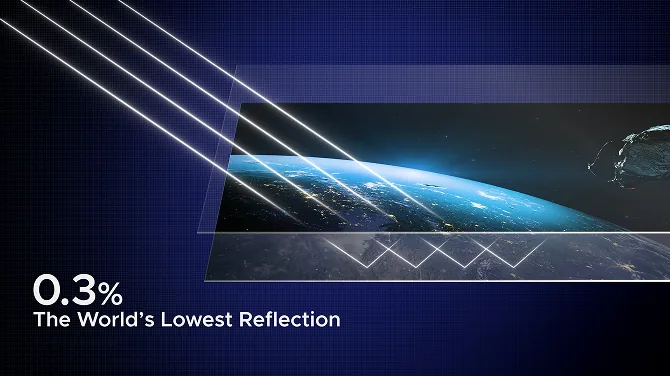
LG Display is making a significant play in 2026 with its ‘Tandem WOLED’ panels. The most anticipated reveal is a new 39-inch 5K ultrawide, boasting a resolution of 5120×2160 pixels. At approximately 142 PPI, this panel is poised to deliver text clarity comparable to a high-end 32-inch 4K LCD, a major leap for ultrawide OLEDs. Notably, this new ultrawide also features a gentler curve than LG’s previously aggressive 800R panels, enhancing user comfort. LG is also introducing a 27-inch 4K WOLED panel, a direct challenge to Samsung’s long-standing dominance in this form factor. The company has streamlined its branding, moving from the more cumbersome ‘Primary RGB Tandem’ to the more succinct ‘Tandem WOLED’, while also teasing an even more advanced ‘Primary RGB Tandem 2.0’ in the pipeline. Beyond resolution and form factor, LG is pushing the boundaries of raw panel performance, claiming an astonishing peak brightness of 4,500 nits (at APL 3%) and an industry-leading ultra-low 0.3% reflectance. These figures translate directly to superior picture quality, deeper contrast, and a far more comfortable viewing experience, even in brightly lit rooms.
Samsung’s QD-OLED: V-Stripe Strikes Back
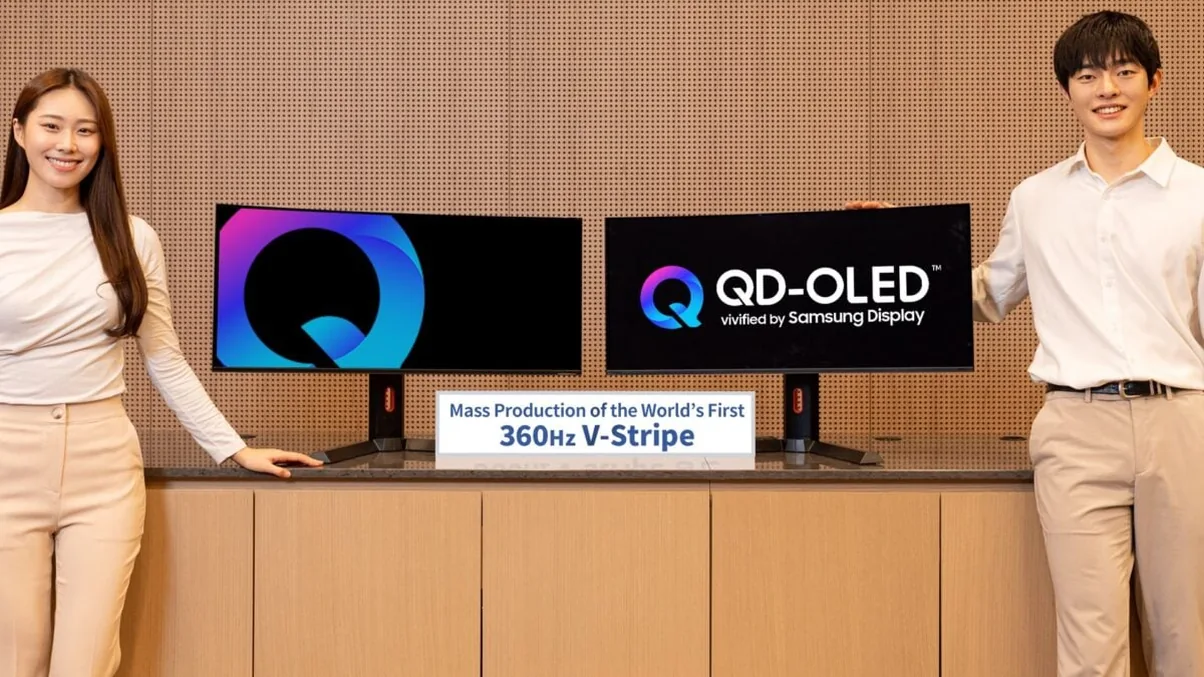
Not to be outdone, Samsung Display is unleashing its own significant advancements in QD-OLED technology. Their counter-move comes in the form of new panels featuring the ‘V-Stripe’ sub-pixel structure. Unlike previous Pentile arrangements that caused text fringing, the V-Stripe employs a vertical RGB layout where each pixel’s red, green, and blue sub-pixels are placed side-by-side. This fundamental change dramatically improves text sharpness, making it a game-changer for anyone with text-heavy workloads like coding, document editing, or extensive reading. Samsung’s new QD-OLED panels also impress with a peak brightness of up to 1,300 nits, ensuring vibrant HDR performance. For gamers, the offerings are equally compelling, with new 27-inch panels boasting an astounding 360Hz variable refresh rate, while the new 31.5-inch 4K QD-OLED will deliver a crisp 140 PPI at a smooth 240Hz. These specifications underscore Samsung’s clear intent to cater to both the highest echelons of gaming performance and the rigorous demands of daily productivity.
The OLED Generations: Navigating the Panel Lottery (Community Perspective)
“Sounds like a whole video of ‘six of one, half dozen of the other’. Both technologies give me the feeling of ‘Oh I want that, but that part doesn’t sound good.'”
— Anonymous Gamer, Fandom Pulse
The sentiment from the community, as captured in our Fandom Pulse, perfectly encapsulates the frustration. For years, PC enthusiasts have grappled with what feels like a ‘panel lottery’, inconsistent naming conventions for OLED generations, and the perceived trade-offs between WOLED and QD-OLED. Past issues like vertical banding on some WOLED panels or the aforementioned text fringing on earlier QD-OLEDs have fostered a sense of ambivalence, making the leap to OLED a decision fraught with compromise. However, the announcements coming out of CES 2026 represent a concerted, focused effort by manufacturers to finally deliver more ‘perfect’ panels. It’s a clear signal that they’re listening to user feedback, aiming to minimize these historical trade-offs and provide a more uncompromised visual experience for everyone.
Next-Gen OLED Showdown: CES 2026 Innovations
| Feature | LG Tandem WOLED (New Gen) | Samsung QD-OLED (New Gen) |
|---|---|---|
| Subpixel Layout | Improved WOLED without white subpixel in specific layouts; Primary RGB Tandem 2.0 (vertical RGB structure for improved clarity) | V-Stripe (Vertical-Stripe) RGB layout |
| Text Clarity | Significantly improved, comparable to 32-inch 4K LCDs (on 39-inch 5K ultrawide) | Dramatically improved, designed for text-heavy workloads |
| Peak Brightness | Up to 4,500 nits (APL 3%) | Up to 1,300 nits |
| New Sizes/Form Factors | 39-inch 5K2K Ultrawide, 27-inch 4K, 27-inch 1440p 540Hz | 31.5-inch 4K UHD (140 PPI), 27-inch 360Hz |
| Key Features | 0.3% ultra-low reflection, ‘Human Friendly’ viewing, gentler curve on ultrawides | High pixel density, Pantone Validated colors, 1Hz VRR for power saving |
Beyond OLED: The Wider Display Landscape
While OLED steals the spotlight, CES 2026 also showcases other compelling advancements in the display landscape. Nvidia’s upgraded G-Sync Pulsar technology for IPS panels, for instance, promises superior motion clarity that could rival some OLEDs in specific scenarios, offering a compelling alternative for those prioritizing raw response over absolute contrast. Moreover, the Intel/Samsung partnership on SmartPowerHDR for OLED is set to deliver significant power efficiency gains, addressing another practical concern for users. As these cutting-edge technologies roll out, an unexpected benefit for budget-conscious gamers could emerge: older generation OLED monitors, still fantastic displays, are likely to become more affordable, offering a prime opportunity to jump into the OLED ecosystem at a lower price point.
Key Takeaways
- CES 2026 heralds a new era for OLED gaming monitors, with a primary focus on solving text clarity issues.
- LG’s Tandem WOLED introduces new panel sizes (39-inch 5K ultrawide, 27-inch 4K) and improved subpixel layouts, alongside industry-leading brightness (4,500 nits) and ultra-low reflection.
- Samsung’s QD-OLED counters with the ‘V-Stripe’ subpixel structure, delivering dramatically sharper text and high refresh rates (up to 360Hz).
- The advancements aim to reduce the ‘panel lottery’ and provide more ‘perfect’ OLED displays for both gaming and productivity.
- Other innovations like Nvidia’s G-Sync Pulsar and Intel/Samsung’s SmartPowerHDR continue to push display boundaries.
Final Verdict
As we look back at the innovations unveiled at CES 2026, it’s clear that this year marks a pivotal moment for OLED display technology. For the competitive gaming community and general PC users alike, the long-standing compromises are finally being addressed head-on. While the elusive ‘perfect’ panel might still be a subjective goal, the commitment from manufacturers to solve core issues like text clarity is undeniable. The gap between WOLED and QD-OLED for everyday use, particularly for text, is narrowing significantly. This means that the choice between these two exceptional technologies will increasingly boil down to personal preference in features like peak brightness, color vibrancy, or motion clarity, rather than glaring fundamental flaws. The future of display technology, with its enhanced clarity and uncompromising performance, is incredibly exciting, and 2026 is setting the stage for an era where OLED truly excels in every scenario.